Earthquake Magnitude vs Intensity: What's the Difference?
Direct answer: Magnitude is one number for the whole earthquake — its size at the source. Intensity is many numbers — how hard the ground shook at each place. A magnitude 6.7 earthquake can be intensity IX, violent, near the fault and intensity V, moderate, a hundred miles away. That is why the same earthquake can sound both "moderate" and "devastating" in the same news cycle, and why neither number alone tells you what happened where you live.
Magnitude: one earthquake, one number
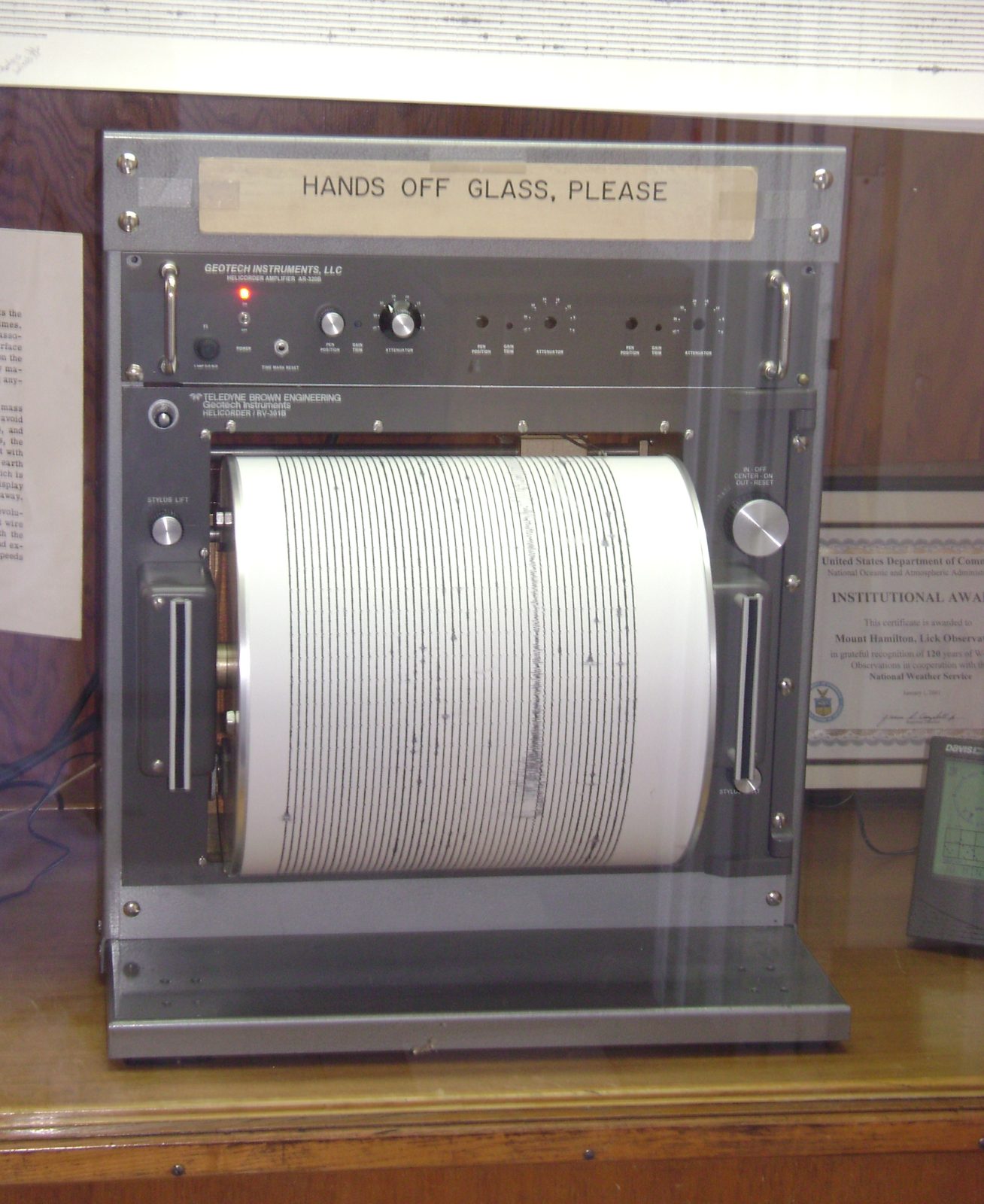
Magnitude is measured from the ground motion recorded on seismometers, and it describes the size of the earthquake at its source. The U.S. Geological Survey puts it plainly: an earthquake has one magnitude, and the magnitude does not depend on where the measurement is made. It is a logarithmic scale, so each whole-number increase represents a tenfold increase in the amplitude measured on a seismogram — and about 32 times more energy released. A magnitude 5.3 is a moderate earthquake, the USGS says, and a 6.3 is a strong one.
The scale most people have heard of, the Richter scale, was developed in 1935 by Charles F. Richter of the California Institute of Technology, as a way to compare the size of earthquakes from the waves recorded on seismographs. In practice it is not commonly used any more, except for small earthquakes recorded locally. For everything else, seismologists use moment magnitude, written Mw, which is based on the physical properties of the earthquake — the area of the fault that slipped, how far it moved, and the strength of the rock. The British Geological Survey calls moment magnitude the most standard and reliable measure of earthquake size, and notes that Richter's original scale underestimates the size of large events.
Magnitudes can also change after the event, as more data is analysed. The British Geological Survey gives the example of the devastating Sumatra earthquake of December 2004, whose magnitude was first reported as Mw 9.0 and recalculated several months later to Mw 9.3. An early magnitude is a first estimate, not a final verdict.
Intensity: what it felt like where you stood
Intensity is a different kind of measurement altogether. It is based on the observed effects of ground shaking on people, buildings and natural features — what fell off shelves, what cracked, who felt it. In the United States, intensity is reported on the Modified Mercalli Intensity Scale, which runs from I, not felt, to X, extreme, in Roman numerals. The scale is built from descriptions: at the lower levels, doors rattle and dishes break; at the higher levels, the descriptions are about structural damage. The British Geological Survey notes that in the UK the European Macroseismic Scale, or EMS, is used instead, with the same idea — twelve levels from "not felt" to "completely devastating" — and that felt reports from the public can be combined into maps showing how shaking varied from place to place.
Because intensity is about a place, not the earthquake, one earthquake produces a whole map of intensities. The USGS gives a clear example: the magnitude 6.7 Northridge earthquake of 1994 produced intensities of IX, violent, close to the epicentre, V, moderate, at distances of about 60 to 200 miles away, and I, not felt, at even greater distances. The USGS also collects those felt reports directly from the public through its "Did You Feel It?" system, which turns thousands of individual experiences into intensity maps within minutes of an earthquake.
Distance is not the only thing that changes intensity. The ground beneath you matters, and so does the depth of the earthquake. The USGS compares two earthquakes to make the point: the magnitude 6.7 Northridge earthquake shook more intensely over a wider area than the slightly larger magnitude 6.8 Nisqually earthquake in Washington, because Northridge happened much closer to the surface — 3 to 11 miles deep, against Nisqually's 30 to 36 miles. A deeper earthquake of the same size is felt less strongly at the surface.
Why the numbers seem to disagree
When an earthquake makes the news, the numbers can look contradictory: one report says magnitude 6.7, another says intensity IX, and a third says people a hundred miles away barely felt it. None of them is wrong. The magnitude is the size of the event, the intensity is the shaking at one place, and early magnitudes are often revised as more seismometer data comes in. A small example from the British Geological Survey shows how local the picture can be: a magnitude 3.1 earthquake near Stockton-on-Tees in January 2020 produced intensities mapped in 2-kilometre squares from 840 felt reports, with some squares recording "felt" and neighbouring squares recording "not felt" at all.
For safety, the intensity is the number that matters to you. Magnitude tells scientists how big the earthquake was; intensity tells you what the shaking did where you are — whether to expect fallen objects, cracked walls, or worse. That is why, after any earthquake, the first question is not "how big was it?" but "how hard did it shake here, and what is damaged?"
Related pages on this site: Drop, Cover, and Hold On: What to Do During an Earthquake, Earthquake Aftershocks: Why the Shaking Is Not Over Yet, After an Earthquake: How to Check Your Home for Damage, Earthquake Early Warning: How ShakeAlert Buys You Seconds, and The 1994 Northridge Earthquake.
Frequently asked questions
If an earthquake was magnitude 6.7, why did my town only feel intensity V?
Because magnitude and intensity measure different things. The USGS explains that an earthquake has one magnitude — its size at the source — but many intensities, which vary with distance from the fault, depth, and local geology. The 1994 Northridge earthquake was magnitude 6.7, yet its intensity ranged from IX near the epicentre to V at 60 to 200 miles away.
Is the Richter scale still used?
Rarely. The USGS says the Richter scale is not commonly used any more except for small earthquakes recorded locally. For all other earthquakes, moment magnitude (Mw) is the more accurate measure, because it is based on the physical size of the fault rupture rather than just the height of the waves on a seismogram.
Can two earthquakes with the same magnitude cause very different damage?
Yes. Depth, distance and the ground beneath you all change the shaking. The USGS notes that the magnitude 6.7 Northridge earthquake shook more intensely over a wider area than the slightly larger magnitude 6.8 Nisqually earthquake, because Northridge was only 3 to 11 miles deep while Nisqually was 30 to 36 miles deep.
What does intensity X mean?
Intensity X is the highest value on the Modified Mercalli Intensity Scale used in the United States — the USGS describes it as extreme. The scale is based on observed effects, so intensity X means catastrophic damage at that location, while the same earthquake may be barely felt further away.
Sources
- USGS - What is the difference between earthquake magnitude and earthquake intensity?
- USGS - Earthquake Magnitude, Energy Release, and Shaking Intensity
- USGS - Did You Feel It? Scientific Background
- British Geological Survey - How are earthquakes detected?
About the author
WND Editorial Team — The World Natural Disasters editorial team curates disaster information from official scientific and humanitarian sources, reviews safety guidance against public-agency recommendations, and maintains the historical database.
Written and reviewed under our editorial policy. Factual claims cite the sources listed above.
Found an error? See our corrections policy.