Earthquake United States
The 1994 Northridge Earthquake: The Quake That Woke Los Angeles
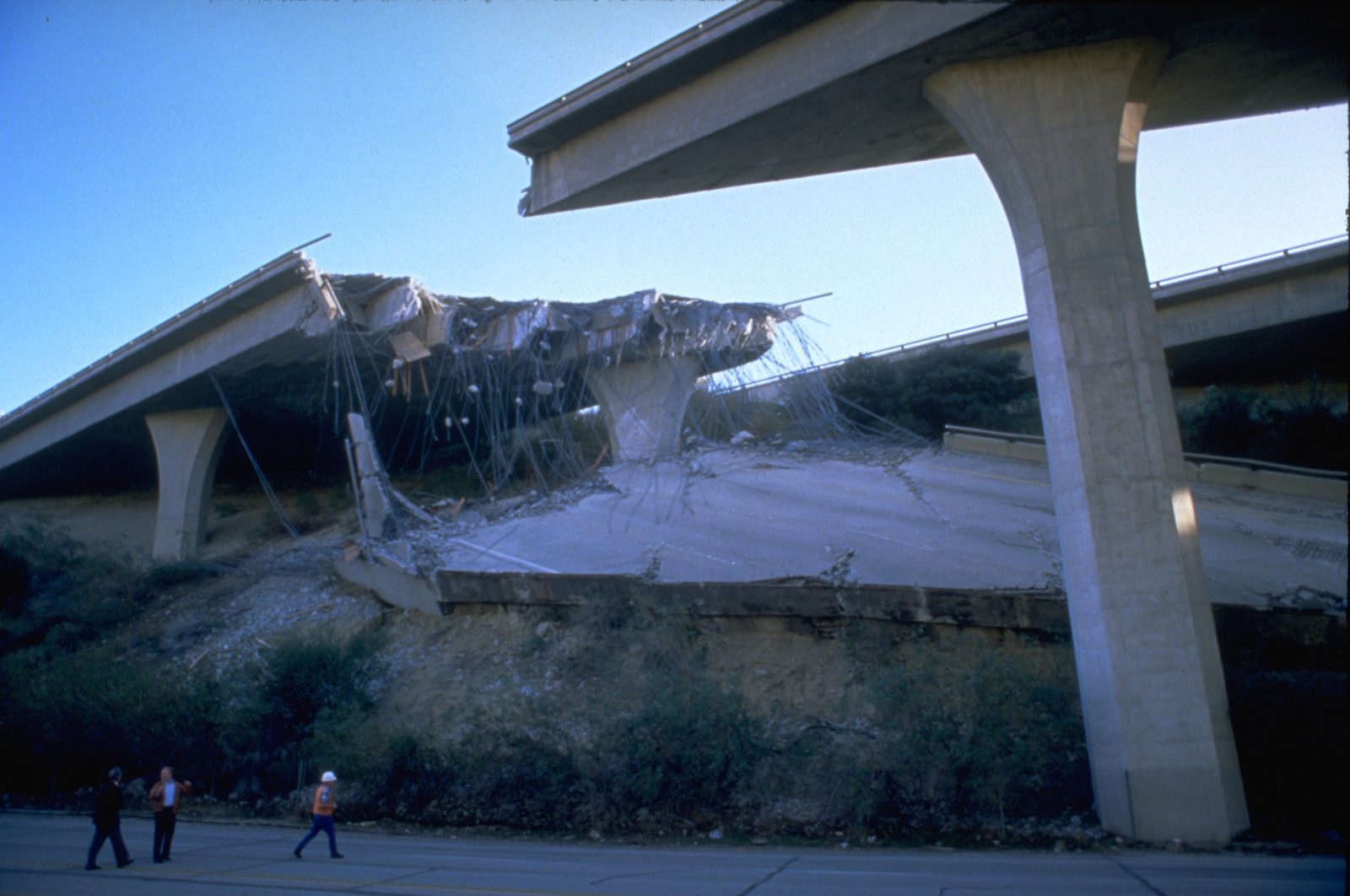
At 4:31 on the morning of Monday, January 17, 1994 — Martin Luther King Jr. Day, a holiday for many — a magnitude 6.7 earthquake struck beneath the town of Northridge in the San Fernando Valley, northwest of Los Angeles. The United States Geological Survey says some 10 million people across the Los Angeles region were woken by the shaking, which lasted 10 to 20 seconds. The shock came from a previously unknown ramp-like thrust fault lying about 10 miles beneath the town — a hidden, or blind, fault that does not break the Earth's surface, and that nobody had known was there.
The damage was immediate and widespread. The shaking collapsed buildings, brought down freeway interchanges — including sections of Interstate 5 — and ruptured gas lines that exploded into fires. More than 1,600 buildings were later red-tagged as unsafe to enter, and another 7,300 were restricted to limited entry. Intense shaking set off thousands of landslides in the mountains around the San Fernando Valley and as far north as Castaic Lake, and liquefaction — saturated soil behaving like liquid when shaken — was triggered as far away as the Port of Los Angeles, some 30 miles from the epicenter. Instruments recorded horizontal ground accelerations of 1.25 times the force of gravity, and vertical accelerations of 1.2 times.
Fifty-seven people died, more than 9,000 were injured, and more than 20,000 were displaced from their homes. The Geological Survey puts the estimated losses at $20 billion, making Northridge the most costly earthquake in United States history; the California Geological Survey puts the damage at up to $20 billion, with more than $40 billion in wider economic loss. The early-morning timing spared lives that would otherwise have been lost in collapsed parking buildings and on failed freeway structures. The death toll is still argued over: the California Geological Survey notes that a later study put it at 72, counting people who died of heart attacks during the shaking.
Northridge changed how California prepares for earthquakes. It proved that a damaging quake could come from a fault nobody had mapped — and that many such hidden faults lie beneath the Los Angeles region. In the aftermath, the Federal Emergency Management Agency awarded the California Geological Survey nearly $20 million to speed up the zoning of earthquake hazards under the state's Seismic Hazards Mapping Act. Since then, more than 6,000 square miles covering the greater Los Angeles area — including all of Orange County, half of Ventura County and parts of the San Francisco Bay Area, more than 150 cities and an aggregate population above 12 million people — have been zoned, so that geological studies must be done before land is developed there. The quake also gave new urgency to the science: the Los Angeles Region Seismic Experiment, begun in 1993, maps the hidden faults beneath the region so that new and existing structures can be built or strengthened to withstand the quakes that are certain to come.
Sources & references
Impact figures
| Fatalities | 57 |
|---|
Figures per cited sources; estimates for older events vary.