Night Tornadoes: Why They Are Deadlier and How to Stay Safe
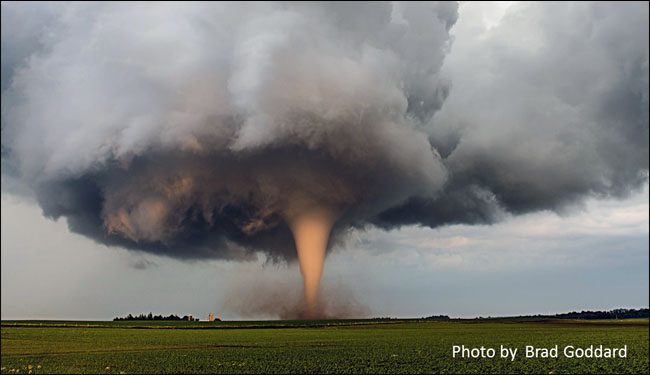
Direct answer: A tornado that strikes while you are asleep is far more dangerous than one in daylight — and the danger is not the tornado itself, it is that you may never hear the warning. Research published by NOAA found that tornadoes at night are nearly twice as deadly as daytime tornadoes. The fix is decided before bedtime: a warning that can wake you and a safe place you already know.
Why night tornadoes kill more people
The numbers come from a study of 140 years of American tornado records by Stephen Strader and colleagues, published in the journal Weather, Climate, and Society and held in NOAA's library. Since 1880, about a third of all tornado deaths in the United States happened at night, and over the last 30 years that share has risen to 38 percent. Deaths from overnight tornadoes — those between local midnight and sunrise — have increased fourfold since the late nineteenth century. The study's blunt summary is that nocturnal tornadoes are nearly twice as deadly as daytime events.
Three things stack against you after dark. First, you are asleep, and a sleeping household hears nothing unless something is built to wake it. Second, you cannot see the tornado coming: in daylight you might spot a funnel cloud or hear the roar Ready.gov compares to a freight train, but at night, unless lightning lights it up, the tornado is invisible until it is on top of you. Third, fewer storm spotters are out at night, so there are fewer eyes confirming what the radar shows. In winter, when nights are longest, a bigger share of the day falls after dark. The Southeast carries the heaviest share of the risk — in Tennessee, 46 percent of tornadoes from 1950 to 2019 struck at night, the highest share of any state in the study.
Set up a warning that can wake you
A warning you sleep through is no warning at all. Ready.gov tells households to sign up for their community's warning system, and notes that the Emergency Alert System and NOAA Weather Radio also carry emergency alerts. A NOAA Weather Radio with a tone alert sits by the bed and sounds when a warning is issued for your county. Wireless Emergency Alerts do the same job on a mobile phone — they arrive as a loud alert, not a silent notification — so keep the phone switched on, charged, and beside the bed. Learn your community's siren tone too, but do not lean on sirens alone at night: they are meant mainly for people outdoors.
Then decide the safe place in advance, in daylight, and walk the route with everyone in the house. Ready.gov's rule is a safe room built to FEMA criteria or a storm shelter built to ICC 500 standards, and failing that, a small, interior, windowless room or basement on the lowest level of a sturdy building. Agree what each person does — who grabs the children, who takes the dog — because at 3 a.m. there is no time to work it out. Practise it once in the dark, so the stairs are familiar when you cannot see them.
Where to go when the warning sounds at night
The National Weather Service's instruction for a house is short: go to your basement, safe room, or an interior room away from windows, and take pets with you if time allows. Cover your head and neck with your arms and put furniture, blankets or a mattress around you. At work or school, follow the tornado drill and go to the shelter location quickly and calmly, keeping clear of windows and of big open rooms such as cafeterias and gymnasiums.
Outside, the rule is to get inside a sturdy building at once. A shed or a storage building is not safe, and neither is a mobile home or a tent — if you are in a mobile home, leave it for a safe building. In a vehicle there is no safe option, only less dangerous ones: drive to the closest shelter, and if you cannot reach one, either get down in the car and cover your head, or leave the car and shelter in a low-lying area such as a ditch. Never shelter under a bridge, which offers little protection and creates a traffic hazard.
After it passes
Stay in your safe place until the warning is over, and keep listening to local news or a NOAA Weather Radio. Ready.gov's after-a-tornado rules still apply in the dark: save phone calls for emergencies and use text messages instead, stay clear of fallen power lines, and wear thick-soled shoes and work gloves if you have to move through debris. Check on neighbours when it is safe — at night, the people most at risk are the ones who live alone with no warning system of their own.
Related pages on this site: Tornado Watch vs. Warning: Know the Difference Before It Hits, Tornado Shelter Safety: Where to Go When a Tornado Strikes, Wireless Emergency Alerts: The Warning on Your Phone, and US weather alerts by state.
Frequently asked questions
Are tornadoes at night really more deadly than daytime ones?
Yes. A NOAA-library study of 140 years of US tornado records found nocturnal tornadoes are nearly twice as deadly as daytime ones. About 38 percent of tornado deaths in the last 30 years happened at night, and deaths from overnight tornadoes have increased fourfold since the late nineteenth century.
How will I know a tornado warning has been issued while I am asleep?
Use a warning that can wake you: a NOAA Weather Radio with a tone alert beside the bed, and Wireless Emergency Alerts switched on on your mobile phone, kept charged and in the bedroom. Sign up for your community's warning system too, and do not rely on outdoor sirens alone at night.
Where is the safest place in my house at night?
A basement, a safe room, or a small interior windowless room on the lowest level of a sturdy building, away from windows. Ready.gov's best protection is a safe room built to FEMA criteria or a storm shelter built to ICC 500 standards. Practise the route in daylight so you can find it in the dark.
Is a mobile home safe in a tornado?
No. The National Weather Service says a mobile home is not safe in a tornado — leave it and get to a sturdy building. The same applies to a shed, a storage building or a tent. If you live in a mobile home, know in advance which sturdy building you will go to.
Sources
- National Weather Service - Tornado Safety
- National Weather Service - What to Do During a Tornado
- Ready.gov - Tornadoes
- Strader et al. 2022 - Revisiting U.S. Nocturnal Tornado Vulnerability (NOAA Library)
About the author
WND Editorial Team — The World Natural Disasters editorial team curates disaster information from official scientific and humanitarian sources, reviews safety guidance against public-agency recommendations, and maintains the historical database.
Written and reviewed under our editorial policy. Factual claims cite the sources listed above.
Found an error? See our corrections policy.