Tornado Watch vs. Warning: Know the Difference Before It Hits
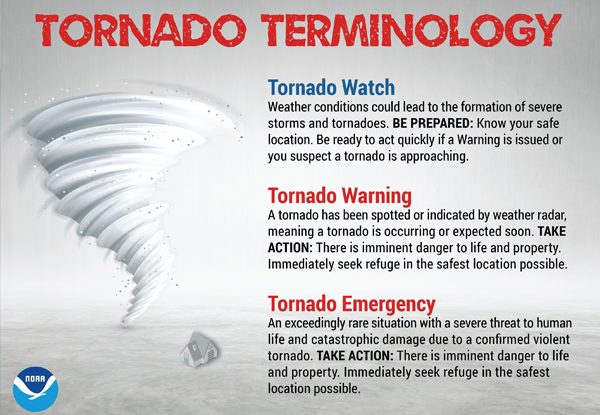
Direct answer: A Tornado Watch means tornadoes are possible — the National Weather Service says "Be Prepared." A Tornado Warning means a tornado has been sighted or indicated by weather radar — "Take Action," because there is imminent danger to life and property. The two alerts ask completely different things of you: a watch is your time to get ready; a warning is your time to get to shelter, fast.
What a Tornado Watch means
A Tornado Watch is issued by the Storm Prediction Center for counties where tornadoes and other severe weather are possible in the next several hours. It does not mean tornadoes are happening — it means the atmosphere is loaded and you need to be alert and ready to move to safe shelter. Watch areas are typically large, covering numerous counties or even whole states, and a watch usually lasts 6 to 8 hours.
During a watch, the National Weather Service asks you to review and discuss your emergency plan, take inventory of your supplies, and check your safe room or shelter location. Turn on local TV or radio, set the alarm switch on your weather radio, take your Wireless Emergency Alert-equipped phone off Do Not Disturb mode, and make sure you have ready access to safe shelter. Tell friends and family that tornadoes are possible. A watch is your preparation window — use it.
What a Tornado Warning means
A Tornado Warning is issued by your local National Weather Service forecast office when a tornado has been spotted by a trained spotter or law enforcement officer, or when Doppler radar shows a thunderstorm circulation that can spawn one. The danger is imminent. Warnings cover a much smaller area — roughly the size of a city or a small county — and typically last 15 to 45 minutes.
When a warning is issued for your area, move immediately to an interior room on the lowest floor of a sturdy building and stay away from windows. If you are in a mobile home, a vehicle, or outdoors, move to the closest substantial shelter and protect yourself from flying debris. There is no time for debate during a warning: according to NOAA's National Severe Storms Laboratory, the average tornado warning lead time is only about 13 minutes.
The rarest alert: Tornado Emergency
The National Weather Service has a third, highest alert level: the Tornado Emergency. It is issued when a violent tornado has touched down and there is a severe threat to human life and property, with catastrophic damage confirmed. The message is blunt: seek shelter immediately, and warn anyone you know inside the area. If you see a tornado approaching, the NWS says do not try to outrun it in a vehicle — shelter in place.
Where to shelter — and where never to shelter
The safest option is a safe room built using FEMA criteria or a storm shelter built to ICC 500 standards. The next best choice is a small, interior, windowless room or basement on the lowest level of a sturdy building. Stay away from windows, doors and outside walls, protect your head and neck with your arms, and watch out for flying debris.
If you go to a basement, forget the old "southwest corner" rule — the Storm Prediction Center calls it a myth. The safest spot is under a sturdy workbench, a mattress or similar protection, out from under heavy furniture or appliances on the floor above. A helmet can protect your skull from flying objects.
Cars are what the Storm Prediction Center calls notorious death traps in tornadoes. If a tornado is visible, far away and traffic is light, you may be able to drive out of its path at right angles to it. If you are caught: park as quickly and safely as possible out of traffic lanes, stay in the car with your seat belt on, get below the windows and cover your head. If you can safely get noticeably lower than the level of the roadway, leave the car and lie there, covering your head.
Two firm rules: never shelter under a highway overpass or bridge — winds can accelerate in tight spaces, debris blasts through, and the structure itself can fail. And never open windows to "equalize pressure" — the Storm Prediction Center says that is absolutely useless, a waste of precious time, and can be very dangerous.
Know the signs and keep your alerts on
Tornadoes can occur at any time of day or night and at any time of year, and they have been reported in all 50 states. Learn the warning signs the National Weather Service lists: a rotating, funnel-shaped cloud; an approaching cloud of debris; or a loud roar like a freight train. Keep a way to receive alerts — the Emergency Alert System, NOAA Weather Radio and phone emergency alerts — and act on them.
Do not confuse the tornado alerts with their severe-thunderstorm cousins. A Severe Thunderstorm Watch means conditions favor storms with hail 1 inch or larger and wind gusts of at least 58 mph; a Severe Thunderstorm Warning means those hazards are occurring or imminent. Both deserve respect, but only a tornado alert means a rotating killer is at your door. See US weather alerts by state for warnings in force now, and browse the historical disaster archive for what tornadoes have done before.
Frequently asked questions
What is the difference between a Tornado Watch and a Tornado Warning?
A Tornado Watch is issued by the Storm Prediction Center for a large area and usually lasts 6 to 8 hours: tornadoes are possible, so be prepared. A Tornado Warning is issued by your local NWS office for a city-sized area and typically lasts 15 to 45 minutes: a tornado has been sighted or indicated by radar, so take action immediately.
How much warning time do you usually get before a tornado?
About 13 minutes on average, according to NOAA's National Severe Storms Laboratory. That is why a warning means acting now — not waiting to see the tornado.
Is it safe to shelter under a highway overpass during a tornado?
No. The Storm Prediction Center says overpasses are not safe: winds can accelerate in the tight space, debris blasts through, and the structure itself can fail. Stopped cars under bridges also block traffic for emergency vehicles.
Should I open my windows when a tornado approaches?
No. The Storm Prediction Center says opening windows to equalize pressure is absolutely useless, wastes precious time, and can be very dangerous because of flying glass.
Sources
- National Weather Service - Understand Tornado Alerts
- NOAA Storm Prediction Center - Tornado FAQ
- NWS Memphis - Local Headline Definitions
- ready.gov - Tornadoes
- NOAA National Severe Storms Laboratory - Warn-on-Forecast case studies
About the author
WND Editorial Team — The World Natural Disasters editorial team curates disaster information from official scientific and humanitarian sources, reviews safety guidance against public-agency recommendations, and maintains the historical database.
Written and reviewed under our editorial policy. Factual claims cite the sources listed above.
Found an error? See our corrections policy.