Wireless Emergency Alerts: The Warning on Your Phone
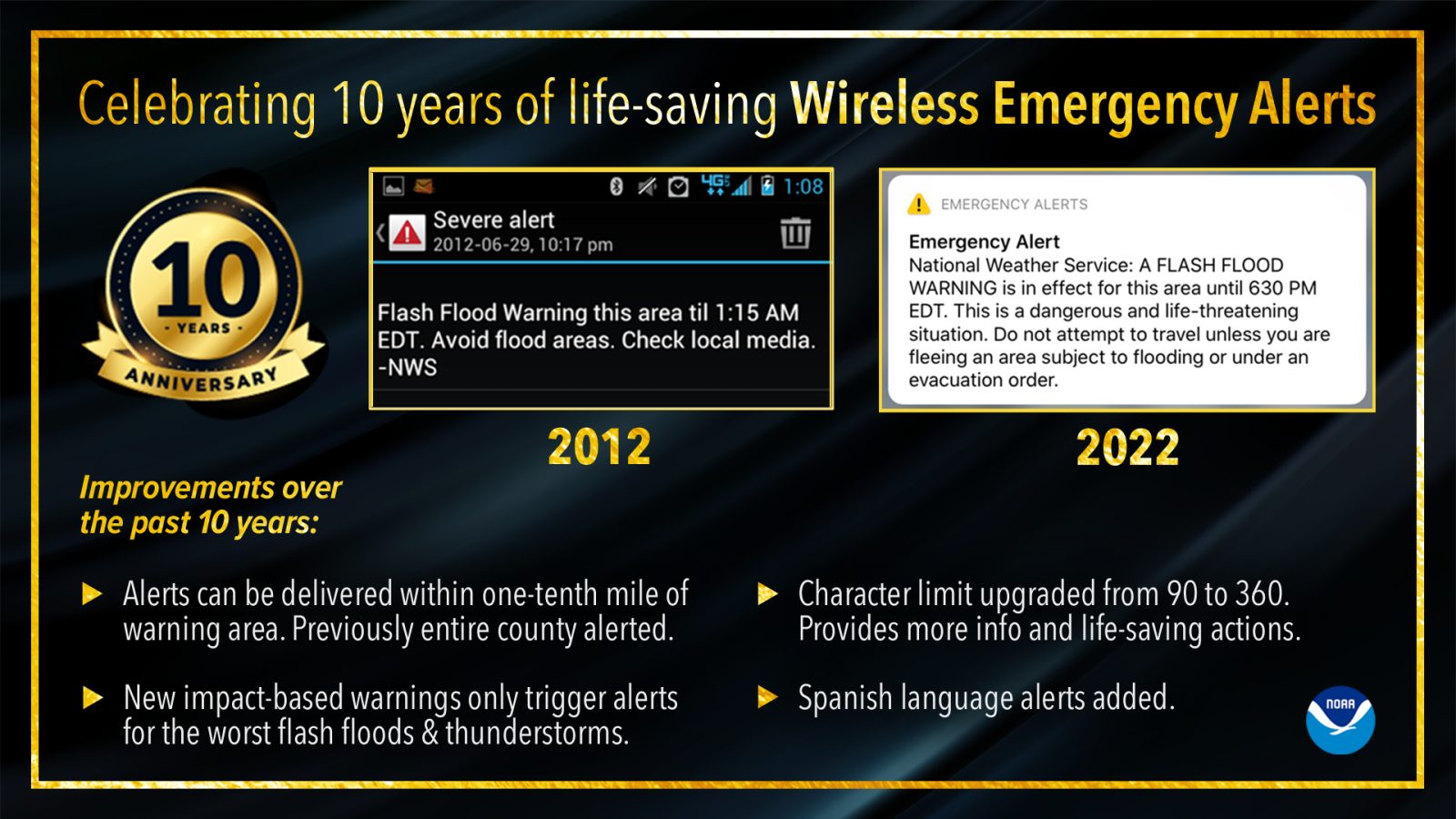
Direct answer: That loud buzz on your phone is a Wireless Emergency Alert, a geographically targeted, text-like message warning you of an imminent threat to safety in your area. Authorized government officials send these alerts through the Federal Emergency Management Agency's Integrated Public Alert and Warning System, known as IPAWS, to participating wireless carriers, which push them to compatible phones in the affected area. You do not need to sign up, you do not pay to receive them, and they arrive with a unique attention signal and vibration so you notice them even if you cannot see the screen. Since the system launched in 2012, it has been used nearly 96,000 times, and the National Weather Service alone has activated 60,000 weather alerts through it.
How an alert travels to your phone
When the National Weather Service issues a weather warning intended to activate an alert, it is immediately sent in the Common Alerting Protocol format to FEMA's IPAWS. If the warning meets the proper thresholds, IPAWS sends the alert to wireless carriers, which broadcast it via cell tower antennas that reach the alert area, and phones in that area receive it. The whole chain is designed for speed: a warning about a tornado or flash flood reaches the phones of people in harm's way within moments of being issued, without anyone having to download an app or subscribe to a service.
The four kinds of alert
Wireless Emergency Alerts cover only critical emergencies, in four types. National Alerts are issued by the President or the Administrator of FEMA. Imminent Threat alerts involve imminent threats to safety or life, such as severe weather or a need to evacuate. AMBER Alerts concern missing children, and Public Safety Messages convey recommendations for saving lives and property. Participating carriers may let you block all but National Alerts, but National Alerts themselves cannot be blocked — that is the rule Congress set when it created the system.
Why you might not get one
To receive an alert, your handset must be WEA-capable, switched on, not on airplane mode, and receiving service from a cell tower of a wireless carrier that participates in the system. Participation by carriers is widespread but voluntary, so a phone on a non-participating network, or roaming on one, may not receive alerts even in the warned area. If a friend nearby received an alert and you did not, the difference is almost always the handset or the carrier, not the warning itself. Check with your wireless carrier whether your phone is WEA-capable.
How precise is the targeting?
When the system launched, alerts generally went to whole counties. Beginning in 2017, providers had to transmit alerts to an area that best approximated the area affected, even if smaller than a county. Since December 2019, providers must geographically target alerts to compatible phones with no more than a one-tenth of a mile overshoot beyond the area the alert originator specified. The Federal Communications Commission cites an industry estimate that about 83 percent of smartphones supported this enhanced targeting in 2023, so false alarms to people outside the warned area keep falling as phones are replaced.
Not a text message, and not a tracker
Wireless Emergency Alerts are not text messages. Many providers transmit them using technology separate from voice calls and SMS, which is why they can still arrive when networks are overloaded. The system is also not designed to track anyone: it does not track the location of people receiving an alert. Instead of following you, it broadcasts to everyone inside a geographic area, which is why visitors and people passing through receive alerts for places they do not live in.
Proof that alerts save lives
The first Wireless Emergency Alert was sent on June 28, 2012, by the National Weather Service for a Flash Flood Warning near Santa Fe, New Mexico. A month later, a tornado carved a 10-mile path through Elmira, New York, damaging 2,000 structures — and despite initial expectations of fatalities, there were not even any injuries, with survivors saying they received the Tornado Warning on their phones and took shelter in time. In July 2013, a camp manager in East Windsor, Connecticut, received a Tornado Warning alert and rushed 29 children and 4 counselors out of a vulnerable soccer dome into a sturdy building; within seconds, the dome was lifted by the tornado's winds and thrown across a highway. The system has improved since: the original 90-character message limit was expanded to 360 characters in June 2020, and Spanish-language messages now go to phones set to Spanish.
When your phone buzzes
Read the message and act on it at once — that is what it is for. An alert means officials have identified an imminent threat where you are, and the message itself carries the protective action to take. Check warnings on our weather alerts page for the wider picture, but do not wait for more information before taking shelter, evacuating, or delaying travel when the alert tells you to. The alert is the warning; the time to act is when you receive it.
Frequently asked questions
Do I need to sign up or pay for Wireless Emergency Alerts?
No. Alerts are free and you do not need to sign up. They go to all subscribers with WEA-capable devices on participating carriers in the affected area, whether or not you knew the service existed.
Why did my friend get an alert but I did not?
Your handset must be WEA-capable, switched on, not on airplane mode, and receiving service from a cell tower of a participating carrier. If any of those is missing, you will not receive the alert even standing next to someone who did.
Can I block Wireless Emergency Alerts?
Partly. Participating carriers may let you block imminent-threat alerts and AMBER Alerts, but National Alerts — issued by the President or the FEMA Administrator — cannot be blocked.
Is a Wireless Emergency Alert a text message?
No. Alerts use technology separate from voice calls and SMS, which is why they can arrive when networks are overloaded. They also do not track your location: they are broadcast to everyone inside a geographic area.
Sources
- Federal Communications Commission - Wireless Emergency Alerts (WEA)
- National Weather Service - 10th Anniversary of Life-Saving Wireless Emergency Alerts
About the author
WND Editorial Team — The World Natural Disasters editorial team curates disaster information from official scientific and humanitarian sources, reviews safety guidance against public-agency recommendations, and maintains the historical database.
Written and reviewed under our editorial policy. Factual claims cite the sources listed above.
Found an error? See our corrections policy.