Hydroplaning: Why Rain Can Lift Your Car Off the Road
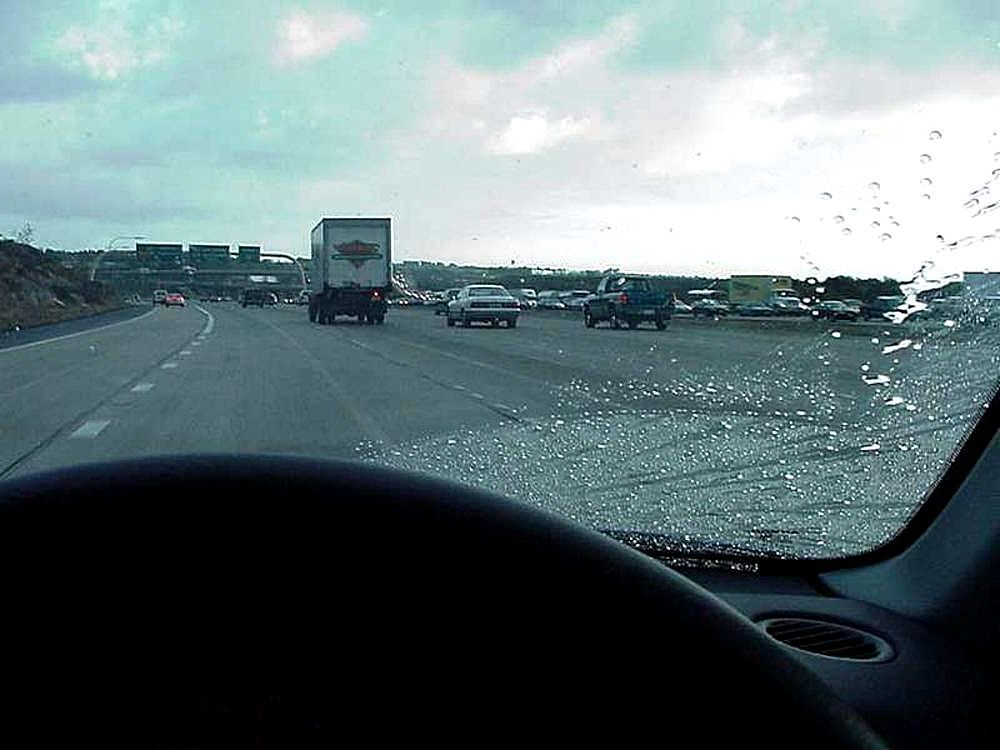
Direct answer: Hydroplaning is what happens when rain lifts your tires clean off the road. A wedge of water builds up under each tire faster than the tread can push it away, and the car rides on the water instead of the asphalt. The Federal Highway Administration compares it to water-skiing: steering goes light and braking does almost nothing. It can happen at speeds as low as 30 miles per hour when there is a lot of standing water — and it is the reason rain, not snow, causes most bad-weather crashes in the United States.
How hydroplaning happens
Your tires are built to move water out of the way: the grooves in the tread channel it backwards as the tire rolls. Hydroplaning starts when the water wins: either the road is covered in more water than the tread can clear, or the car is travelling faster than the tread can work. Once the film of water is thicker than the tread is deep, pressure builds in front of the tire and lifts it off the surface. Three things make it more likely: speed, worn tread and low tire pressure. The first minutes of rain are the worst: rain mixes with the oil and diesel on the road and turns the surface slick before the water washes it away. Water also pools where you least want it — in the outer lanes, in wheel ruts, in dips and near the curb.
The numbers that should slow you down
Rain is the weather most often involved in crashes. The Federal Highway Administration, using National Highway Traffic Safety Administration data, counts about 745,000 weather-related crashes a year in the United States — roughly 12 percent of all crashes — and more than 77 percent of them happen in rain or mist. Over 3,800 people are killed and more than 268,000 injured in weather-related crashes in an average year. In Britain, the Highway Code puts it simply: in wet weather, stopping distances will be at least double those on dry roads. The Federal Highway Administration's training manual puts the hydroplaning threshold at 30 miles per hour with a lot of standing water, and the risk rises steeply from there. The National Highway Traffic Safety Administration sets the floor for tread: at least 2/32 of an inch on every tire. The penny test tells you when you are there — push a penny into the tread with Lincoln's head upside down, and if you can see the top of his head, the tire needs replacing.
Before you drive in rain
Start with the tires. Check the pressure when the tires are cold, and fill them to the pressure in your owner's manual or on the driver's door-frame label — not the maximum printed on the tire itself. Look at the tread for uneven wear, which is a sign the tires need rotating or the wheels aligning. Check the wipers: if they streak, replace them before the rain, not during it. Make sure the headlights, tail lights, brake lights and indicators all work, and switch the headlights on in rain — in Britain the Highway Code requires them when visibility is seriously reduced, generally when you cannot see for more than 100 metres. Check the forecast first; if the roads are not in good shape, consider putting off a non-essential trip. And switch the cruise control off. On a wet road it keeps the car at speed when you should be slowing down, and if the car hydroplanes it can take a second or two to disengage — seconds you do not have.
If your car starts to float
You will feel it first: the steering goes light and unresponsive, the engine note rises without the car speeding up, and the back of the car may start to drift. The Federal Highway Administration's instruction is short — release the accelerator and avoid applying the brakes. Do not stamp on the brakes: locked wheels cannot grip when they touch the road again, and the car can spin. Keep the wheel steady and pointed where you want to go, making only small, gentle corrections. The Highway Code gives the same advice in British terms: if the steering becomes unresponsive, it probably means water is preventing the tires from gripping the road, so ease off the accelerator and slow down gradually. As the car slows by a few miles per hour, its weight pushes the tread back through the water film and grip returns — you will feel the steering come back. Then slow down further and stay slow until you are clear of the standing water. Leave more space than usual: the Federal Highway Administration's rule is at least three seconds behind the vehicle in front in good conditions, adding one second for each hazard — four seconds in rain, five when standing water is on the road.
When the water is too deep to drive through
Water deep enough to float or stall a car looks much like the water that causes hydroplaning. Never drive through water that covers the road markings, and never drive around barriers into a flooded stretch. If you meet a flooded road, turn around.
Related pages on this site: Turn Around, Don't Drown: Never Drive Through Floodwater, and US weather alerts by state for the warnings in force now.
Frequently asked questions
What is hydroplaning?
Hydroplaning is when a layer of water builds up between your tires and the road so the tires ride on the water instead of gripping the pavement. The Federal Highway Administration describes it as being like water skiing: the tires lose contact with the road and have little or no traction, so steering and braking are compromised.
At what speed can you hydroplane?
The Federal Highway Administration says hydroplaning can occur at speeds as low as 30 miles per hour when there is a lot of standing water on the roadway. The risk rises with speed, water depth, worn tread and low tire pressure.
What should I do if my car hydroplanes?
Ease off the accelerator and avoid applying the brakes, keep the steering wheel steady and pointed where you want to go, and wait for the tires to regain contact as the car slows. The Highway Code gives the same advice: ease off the accelerator and slow down gradually.
Does cruise control make hydroplaning worse?
Yes. Cruise control keeps the car at speed on a wet road, and if the car hydroplanes it can take a second or two to disengage. The National Weather Service tells drivers to deactivate cruise control and slow down in heavy rainfall to reduce the risk of hydroplaning.
Sources
- Federal Highway Administration - Pilot/Escort Vehicle Operators Training Manual, Module 7
- Federal Highway Administration - How Do Weather Events Affect Roads?
- National Highway Traffic Safety Administration - Winter Driving Tips
- GOV.UK - The Highway Code: Driving in adverse weather conditions (226 to 237)
About the author
WND Editorial Team — The World Natural Disasters editorial team curates disaster information from official scientific and humanitarian sources, reviews safety guidance against public-agency recommendations, and maintains the historical database.
Written and reviewed under our editorial policy. Factual claims cite the sources listed above.
Found an error? See our corrections policy.