Drought Safety: How to Prepare When the Rain Stops Coming
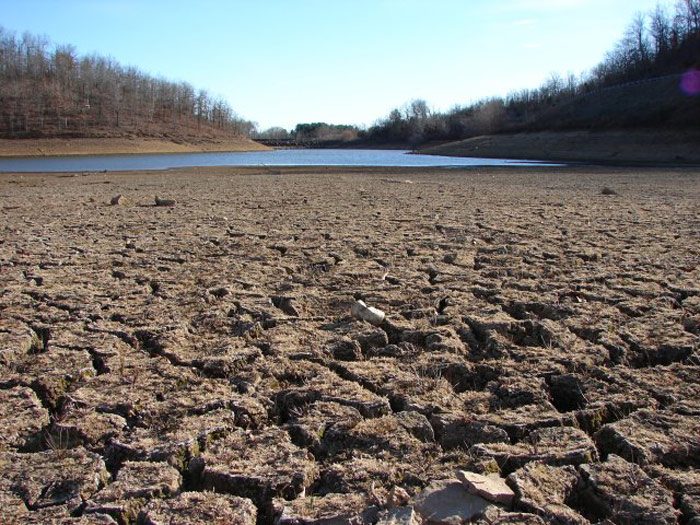
Direct answer: A drought is not one dry week. It is a long stretch of below-average rain that slowly drains rivers, reservoirs and groundwater until there is not enough water to go round. The National Weather Service defines it simply as a deficiency in precipitation over an extended period, and it is a normal, recurring feature of climate that occurs in virtually all climate zones. Because it builds so slowly, it is the easiest disaster to ignore — and one of the most expensive. The way through one is to start saving water before the restrictions arrive.
The four kinds of drought
Drought is not one thing, and the National Weather Service sorts it into four kinds, because each one hits a different part of life. Meteorological drought is the rainfall deficit itself — how dry it is and how long the dry spell lasts. Hydrological drought is what follows: falling streamflow, shrinking reservoirs and lakes, and a dropping water table. Agricultural drought is what farmers feel first: soil too dry for crops, and too little water stored for irrigation. Socioeconomic drought is the last stage, when demand for water simply outruns supply. The Met Office uses the same idea with four types from the Intergovernmental Panel on Climate Change, swapping socioeconomic drought for ecological drought — when the lack of water harms the natural environment as well as the farms. However it is counted, the point is the same: a drought is defined by who or what runs out of water, not just by the lack of rain.
How drought is tracked
Nobody has to guess whether a drought is coming. The U.S. Drought Monitor is a weekly map that pulls together rainfall, soil moisture, streamflow and field reports from experts across the country into one consensus picture. It sits inside the National Integrated Drought Information System, which Congress set up in 2006 to run drought monitoring, forecasting and early warning at federal, state and local level. The National Oceanic and Atmospheric Administration's Climate Prediction Center also publishes monthly and seasonal drought outlooks, showing where drought is expected to persist and where new drought may develop. In Britain, the Met Office notes that drought is unusual among hazards because it builds up over time — it can last from a few weeks to several years.
Before a drought: make saving water a habit
Ready.gov, the US government's preparedness site, is blunt about the best preparation: conserve water, and make it part of daily life, not an emergency measure. Start with the leaks. A tap that drips once a second wastes 2,700 gallons of water a year. Check every tap and pipe, and fit aerators with flow restrictors. In the bathroom, a low-volume toilet uses less than half the water of an older model, and an ultra-low-flow showerhead cuts every shower. Outside, plant native and drought-tolerant grasses, shrubs and trees, group them by how much water they need, and water them with drip irrigation rather than sprinklers. Mulch around trees and plants to hold moisture in the soil. And put the hose away for cleaning: a garden hose can pour out 600 gallons or more in only a few hours, so sweep driveways and paths with a broom instead.
During a drought: live within the rules
Once a drought is declared, the rules are not suggestions. Always observe state and local restrictions on water use, and contact your state or local government for the current limits. Indoors, take short showers instead of baths, run the washing machine and dishwasher only when they are full, and do not let the water run while you brush your teeth or shave. Outdoors, remember that most lawns only need about one inch of water a week, and a heavy rain removes the need for watering for up to two weeks. Water early in the morning or late in the evening, in several short sessions so the ground can absorb it, and check the soil first — if the grass springs back when you step on it, it does not need water yet. In extreme drought, Ready.gov advises letting lawns die in favour of preserving trees and large shrubs. Cover pools and spas to slow evaporation: a single back-flush with a traditional pool filter uses 180 to 250 gallons.
Why drought is worth preparing for
Drought rarely makes the evening news the way a hurricane does, but the bill is enormous. The National Centers for Environmental Information counted $232.5 billion in inflation-adjusted losses from billion-dollar drought events in the United States through July 2017. The history is a warning too: the National Weather Service notes that the Dust Bowl drought of the 1930s and the drought of the 1950s each lasted five to seven years and covered large areas of the continental United States. In Britain, the Met Office's UKCP18 projections point to drier summers on average, with stronger drying in southern England — and as rivers and reservoirs fall, the risk of wildfire rises with them. Drought is a slow disaster. The households that come through it best are the ones that treated water as precious before anyone told them to.
Related pages on this site: US weather alerts by state for the warnings in force now, and the historical disaster archive.
Frequently asked questions
What is a drought?
The National Weather Service defines drought as a deficiency in precipitation over an extended period. It comes in four kinds: meteorological (the rainfall deficit itself), hydrological (falling rivers, reservoirs and groundwater), agricultural (soil too dry for crops) and socioeconomic (demand for water outrunning supply).
How long can a drought last?
From a few weeks to several years, according to the Met Office. The Dust Bowl drought of the 1930s and the drought of the 1950s each lasted five to seven years and covered large areas of the continental United States.
How much water does a dripping tap waste?
A tap that drips once a second wastes 2,700 gallons of water a year, according to Ready.gov. Fixing dripping taps and fitting aerators with flow restrictors is one of the quickest savings a household can make.
Does the UK get droughts?
Yes. The Met Office notes that drought builds up over time and can last from a few weeks to several years. Its UKCP18 projections point to drier summers on average, with stronger drying in southern England.
Sources
- Ready.gov - Drought
- National Weather Service - Drought
- Met Office - UK and Global extreme events: Drought
About the author
WND Editorial Team — The World Natural Disasters editorial team curates disaster information from official scientific and humanitarian sources, reviews safety guidance against public-agency recommendations, and maintains the historical database.
Written and reviewed under our editorial policy. Factual claims cite the sources listed above.
Found an error? See our corrections policy.