Earthquake Home Safety: Secure Furniture Before It Falls
Direct answer: Most of the injuries in an earthquake at home do not come from the building falling down. They come from what falls inside it — a bookcase tipping over, a television sliding off its stand, a water heater tearing free of its pipes. The good news is that fixing most of it costs very little and takes an afternoon. Ready.gov, the US government's preparedness site, puts it first on its list: secure heavy items in your home like bookcases, refrigerators, water heaters, televisions and objects that hang on walls, and store heavy and breakable objects on low shelves. Start there.
Start with a hazard hunt
Before you buy anything, walk through your home room by room and imagine what would happen if the floor moved a foot sideways. That is the earthquake home hazard hunt, the method in the Federal Emergency Management Agency's guide Earthquake Safety at Home. Look for three kinds of trouble: things that are high up and can fall on you, things that are tall and can topple over, and things that can fall and block your way out. Check what hangs over every bed, sofa and chair — heavy mirrors, picture frames and hanging plants have no business above a place where someone sleeps or sits. Look at the tall furniture: bookcases, china cabinets, wardrobes and filing cabinets. Look at the kitchen, where cabinet doors can fly open and throw their contents across the room. And look at the water heater, the refrigerator and the furnace, which are heavy enough to rupture gas and water lines if they move. Write down everything you find — most of it is fixed with a strap, a bracket or a latch.
Anchor the big things
Bookcases are the classic danger. Bookcases tip over and block exits. Anchor every tall bookcase and cabinet to the wall studs with L-brackets, corner brackets or nylon straps — screws must bite into the studs, not just the drywall, or they will pull straight out. If two bookcases stand side by side, fasten them to each other as well as to the wall. The water heater deserves the same treatment. Strap it to the wall studs with heavy metal strapping, top and bottom, and make sure the gas and water connections are flexible rather than rigid pipe, so they bend instead of snapping. The same goes for the refrigerator, the furnace and gas appliances: strap them in place and fit flexible connectors. Televisions, computers and microwaves are heavy — keep them on low shelves and secure them with flexible nylon straps. And move the heavy things down: books, china and glassware belong on low shelves, not on top of the bookcase.
Latches, hooks and putty
Small fixes stop most of the mess. Fit strong latches or childproof catches on kitchen and bathroom cabinets so the doors cannot fly open and spill their contents. Hang mirrors, pictures and plants on closed hooks rather than open ones, and secure the bottom corners with earthquake putty or adhesive pads. Put only soft art, like tapestries, over beds and sofas. Brace ceiling fans and light fixtures, and fit safety film on windows. Store flammable liquids and pesticides in latched cabinets on bottom shelves, away from heat. Keep the tops of bookcases clear, and keep at least two exits from every room clear — move tall furniture away from doors so it cannot trap you if it falls.
The house itself
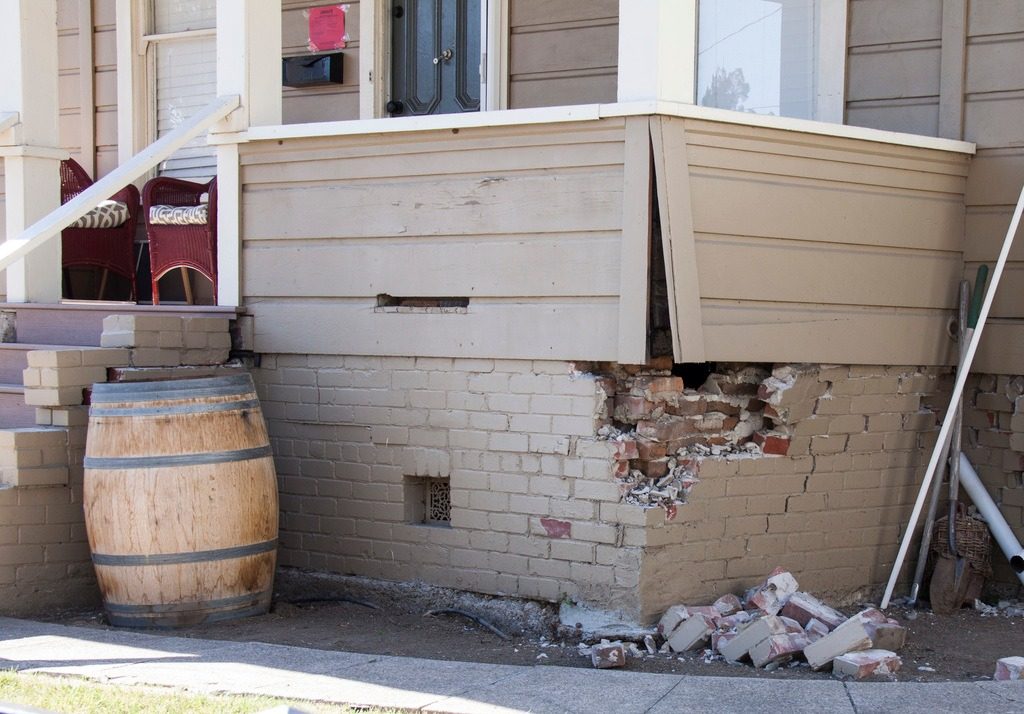
Securing the contents is the cheap half of the job. The other half is the structure, and it is worth knowing about even if you hire the work out. Ready.gov advises considering improvements to fix structural issues that could cause a building to collapse — the classic one is bolting the house to its foundation, since houses that are not bolted down have been known to slide off their foundations in strong shaking. Crawlspace walls can be sheathed in plywood, masonry chimneys braced or replaced, and garages with living space above them strengthened. Learn where the gas, water and electricity shut-offs are, and teach your household how to use them — but do not shut off the gas unless you smell it leaking or suspect damage. And check your insurance: a standard homeowner's policy does not cover earthquake damage, so consider an earthquake policy if you live in a quake-prone area.
It matters everywhere — including Britain
Earthquakes are not only a California problem. The City of Seattle's guide notes that the potential for earthquakes exists in almost every corner of the United States. In Britain, the British Geological Survey detects between 200 and 300 earthquakes a year, and between 20 and 30 are felt by people. A magnitude 4 earthquake happens in Britain roughly every two years, and the largest known British earthquake, near the Dogger Bank in 1931, reached magnitude 6.1. The shaking in Britain is usually small, but the same falling furniture injures people at any magnitude. Wherever you live, the rule is the same: the shaking you cannot control, but the bookcase you can.
Related pages on this site: our Drop, Cover, and Hold On guide for what to do when the shaking starts, and the historical disaster archive.
Frequently asked questions
What is an earthquake home hazard hunt?
It is a room-by-room walk through your home imagining what would fall, topple or block an exit if the ground shook. FEMA's Earthquake Safety at Home guide recommends it as the first step: look for heavy items stored high up, tall furniture that can tip over, and anything that could block your way out, then secure or move each one.
How do I secure a water heater for an earthquake?
Strap it to the wall studs with heavy-gauge metal strapping, top and bottom, and fit flexible gas and water connections so the pipes bend instead of snapping. A water heater that tears free can flood the house, leak gas and cut off your emergency water supply.
Do I need to bolt my house to its foundation?
It depends on the house. Homes bolted to their foundations are less likely to slide off them in strong shaking, and Ready.gov advises considering structural improvements if your building has issues that could cause it to collapse. A structural engineer can tell you whether your house needs it.
Does home insurance cover earthquake damage?
No. Ready.gov notes that a standard homeowner's insurance policy does not cover earthquake damage, so consider obtaining an earthquake insurance policy if you live in a quake-prone area.
Sources
- Ready.gov - Earthquakes
- FEMA P-530 - Earthquake Safety at Home (March 2020)
- City of Seattle - A Homeowner's Guide to Nonstructural Earthquake Retrofit
- British Geological Survey - Where do earthquakes occur?
About the author
WND Editorial Team — The World Natural Disasters editorial team curates disaster information from official scientific and humanitarian sources, reviews safety guidance against public-agency recommendations, and maintains the historical database.
Written and reviewed under our editorial policy. Factual claims cite the sources listed above.
Found an error? See our corrections policy.