Winter Tires: When to Switch and Why They Grip
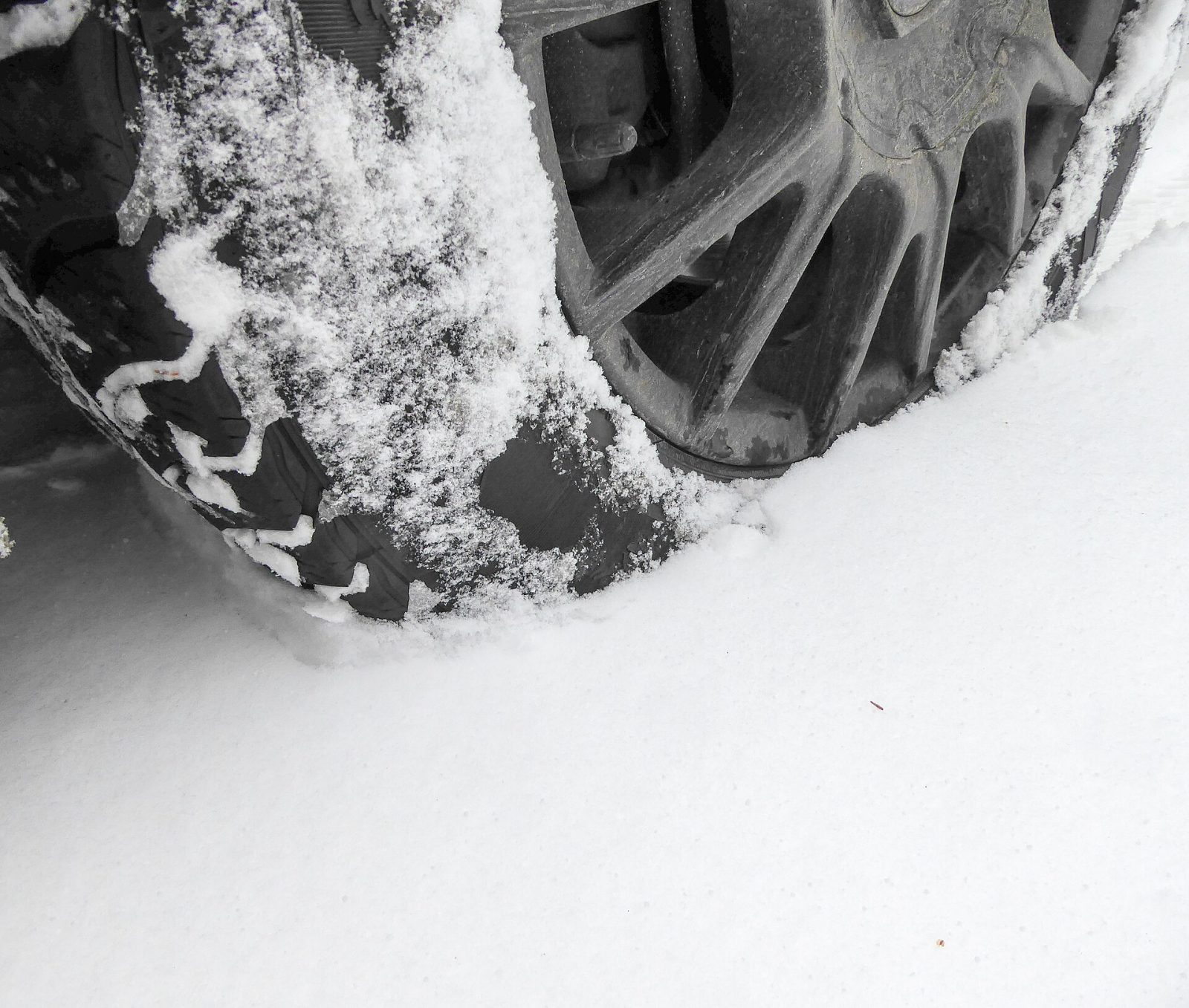
Direct answer: Fit winter tires once temperatures are regularly below 7°C (45°F), and fit them on all four wheels. Below that temperature, all-season and summer tires begin to lose elasticity and grip, while winter tires stay flexible and keep their traction at much lower temperatures. That is Transport Canada's rule, and NHTSA adds the practical part: have snow tires installed in the fall, before the snow arrives, not after the first storm.
Why the rubber matters more than the tread
A winter tire is more than an all-season tire with a deeper tread: it is made from a softer rubber compound that stays flexible in the cold, with tread designed to clear snow and slush. Transport Canada explains that once the temperature drops below 7°C (45°F), all-season and summer tires stiffen, so they grip the road less, while winter tires keep their elasticity and grip at much lower temperatures. Wide, high-performance tires, other than those specifically designed as winter tires, are not suitable for snow-covered roads.
That is why the changeover point is a temperature, not a date: waiting for the first snowfall means driving the worst days of the season on tires that have already lost their grip.
How to spot a real winter tire
Look for the peaked mountain with snowflake symbol on the sidewall. Transport Canada says tires marked with this symbol meet specific snow traction performance requirements and have been designed specifically for use in severe snow conditions. The symbol is the check that matters: the tire was tested for snow traction, not just labelled for winter.
Fit all four, and put the best on the rear
For control and stability in icy conditions, install winter tires in sets of four. Handling improves when tires with the same type, size, speed rating and load index are on all four wheels. Do not mix tread patterns, internal construction and size: that makes the vehicle less stable. Put the best tires on the rear to help maintain directional control: the tires with the deepest tread go in the back.
Check the tread before the season starts
As a tire wears, it loses traction. Transport Canada says not to use tires worn close to 4 mm (5/32 inch) of tread on snow-covered roads, and never tires with less than 4 mm of tread. Some tires have tread-wear indicators at 2 mm; tires worn close to them should not be used on snow-covered roads. NHTSA gives the same check in inches: tire tread should be at least 2/32 of an inch on all tires. Use the penny test: place a penny in the tread with Lincoln head upside down, and if you can see the top of his head, the tire needs replacing.
Check the pressure when the tires are cold
Proper air pressure extends tread life, improves safety and reduces fuel consumption. Check pressure often, especially before highway driving or longer trips. A tire with good pressure in a warm garage will be under-inflated below zero outside, because tire pressure falls in the cold. So check when the tires are cold, meaning the car has not been driven for at least three hours. Fill each tire to the manufacturer recommended pressure, shown in the owner manual and on the driver side door frame label. Do not inflate to the pressure listed on the tire itself: that is the maximum the tire can hold, not the recommended pressure for the vehicle. Check the spare tire pressure regularly as well. For more on staying safe in the cold, see our cold safety guide.
The rules are different in Quebec, the UK and Colorado
Winter tires are a safety choice almost everywhere, but in some places they are the law, and the rules change at the border.
Quebec: winter tires are the law
In Quebec, every motor vehicle registered in the province must be fitted with winter tires from December 1 to March 15, or its driver faces a fine of $200 to $300. The tire must show the peaked mountain with snowflake pictogram, or be studded (studded tires are permitted from October 15 to May 1). Quebec's government recommends at least 4.8 mm of tread for winter driving, and says good winter tires cut braking distance by 25% and stay elastic down to -40°C (-40°F).
United Kingdom: no winter-tyre law, but a tread minimum
The UK has no law that makes winter tyres compulsory. The Highway Code's adverse-weather rules (226 to 237) advise against travelling in snow and ice unless the journey is essential, and warn that stopping distances on ice and snow can be ten times greater than on dry roads. The legal floor is tread depth: cars, light vans and light trailers must have at least 1.6 mm of tread across the central three-quarters of the tread and around the whole circumference.
Colorado: the Traction Law
Colorado's Passenger Vehicle Traction Law (Code 15), activated by the Colorado Department of Transportation when winter conditions demand it, requires tires with at least 3/16-inch tread — snow tires, M+S tires or all-weather tires — or chains or an approved alternative traction device.
Wherever you drive, the physics is the same. Check weather alerts before a winter trip.
Frequently asked questions
When should I switch to winter tires?
Once temperatures are regularly below 7°C (45°F). Transport Canada says all-season and summer tires begin to lose elasticity below that temperature, and NHTSA says to have snow tires installed in the fall, before the snow arrives.
What does the mountain snowflake symbol mean?
Tires marked with the peaked mountain with snowflake symbol meet specific snow traction performance requirements and are designed for severe snow conditions, according to Transport Canada. In Quebec, only tires with that pictogram — or studded tires — satisfy the winter tire law.
Do I need winter tires on all four wheels?
Yes. Transport Canada says to install winter tires in sets of four, with the same type, size, speed rating and load index on all four wheels. Put the tires with the deepest tread on the rear to help maintain directional control.
Are winter tires required by law anywhere?
In Quebec, yes: winter tires are mandatory from December 1 to March 15, with fines of $200 to $300. The UK has no winter-tyre law, but cars must have at least 1.6 mm of tread. In Colorado, the Traction Law requires at least 3/16-inch tread on qualifying tires, or chains, when it is active.
Sources
- Transport Canada - Using winter tires
- NHTSA - Winter Driving Tips
- Gouvernement du Québec - Requirements for winter tires
- UK Highway Code - Driving in adverse weather conditions (226 to 237)
- UK Highway Code - Annex 6: Vehicle maintenance, safety and security
- Colorado Department of Transportation - Passenger Vehicle Traction Law (Code 15)
About the author
WND Editorial Team — The World Natural Disasters editorial team curates disaster information from official scientific and humanitarian sources, reviews safety guidance against public-agency recommendations, and maintains the historical database.
Written and reviewed under our editorial policy. Factual claims cite the sources listed above.
Found an error? See our corrections policy.