Frostbite and Hypothermia: Know the Warning Signs
Direct answer: Frostbite and hypothermia are the two injuries cold weather inflicts on your body, and both can set in while you still feel "fine." Frostbite freezes skin and the tissue beneath it, starting with fingers, toes, nose and ears. Hypothermia drops your body's core temperature — and it is the most common winter weather killer, striking even when the thermometer reads 30 to 50°F. The warning signs are unmistakable once you know them, and knowing what to do in the first minutes can save fingers, toes, and lives.
Wind chill: the number that matters
The air temperature alone does not tell you how fast cold can hurt you. Wind chill combines wind and cold into the rate of heat loss from exposed skin. The National Weather Service gives this example: air at -5°F with a 20 mph wind produces a wind chill near -30°F — your body loses heat at the same rate as if it were -30°F with no wind. When wind chill values approach -25°F, frostbite is possible on exposed skin within 15 minutes. Check the wind chill, not just the temperature, before you dress for the day.
Frostbite: the warning signs
Frostbite is the freezing of skin and the body tissue just beneath it. Because the body protects its vital organs first, it cuts circulation to the extremities — which is why frostbite starts where blood flow is most limited: fingers, toes, nose and ears.
Watch for these signs, listed by the Centers for Disease Control and Prevention:
- Redness or pain in any skin area — the first sign that frostbite may be beginning.
- A white or grayish-yellow patch of skin.
- Skin that feels unusually firm or waxy to the touch.
- Numbness — and because frozen tissue is numb, victims are often unaware until someone else points it out.
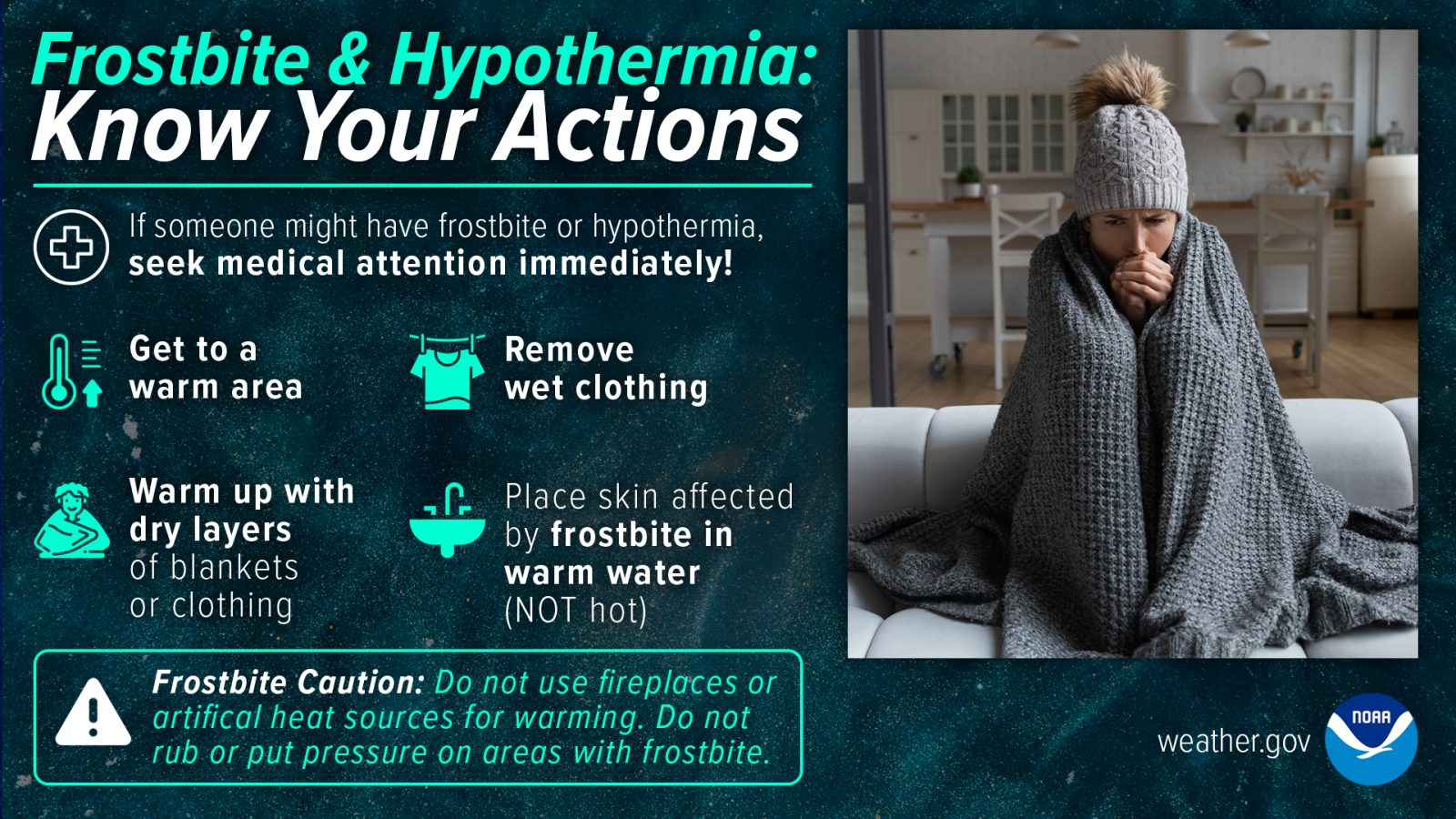
Frostbite can permanently damage the body, and severe cases can lead to amputation. If you notice signs, seek medical care. If medical help is not immediately available, get into a warm room, and hold the frostbitten area closely against warm skin to restore blood flow and warmth — for example, tuck frostbitten fingers under your arms. Do not rub the area with snow or massage it, and do not try to rewarm numb tissue with a heating pad, heat lamp, stove or radiator: numb skin burns easily.
Hypothermia: the silent killer
Hypothermia is a dangerously low body temperature, and the National Weather Service calls it the most common winter weather killer. The surprise is how warm it can be: hypothermia deaths have occurred with air temperatures between 30 and 50°F, and they can occur above 40°F if a person is wet from rain, sweat or cold water and becomes chilled. Wet clothing makes hypothermia far more likely — it is the stranded traveler, the wet hiker, the hunter who stops moving, who is at risk.
The CDC's warning signs in adults: shivering, exhaustion or feeling very tired, confusion, fumbling hands, memory loss, slurred speech, and drowsiness. In babies, watch for bright red, cold skin and very low energy. Hypothermia attacks the brain, so victims may not recognize their own danger — keep an eye on each other.
Hypothermia is a medical emergency. If you notice these signs, take the person's temperature: if it is below 95°F, get medical attention immediately. If medical help is not reachable, get the person sheltered indoors in the warmest room, remove wet clothing, and begin warming. Do not give alcohol or caffeine — and do not wait to see if things improve on their own.
Who is at highest risk
The CDC flags older adults without adequate food, clothing or heating; people who spend long periods outdoors, including hikers, hunters and people experiencing homelessness; people who drink alcohol in excess or use illicit drugs; and babies sleeping in cold rooms. Children lose heat faster than adults, so bundle them early and check their cheeks, noses and fingers often. And the buddy rule from outdoor safety: never let someone get dangerously cold alone.
Dress for it: the CDC checklist
When extreme cold is forecast, stay indoors if you can. If you must go out, the CDC says dress properly: a scarf or knit mask that covers your face and mouth, a hat, mittens or gloves, a water-resistant coat, water-resistant boots, and several layers of loose-fitting clothing. Keep the frostbite-prone parts covered: nose, ears, toes, cheeks, chin and fingers. Layering traps warm air; waterproofing keeps you dry; and dry matters as much as warm, because wet is what turns a cold day into a medical emergency.
Related pages on this site: our Severe Cold & Winter Storm Safety guide for winter storm preparation and stranded-driver guidance, the US weather alerts by state for cold advisories in force now, and the historical disaster archive.
Frequently asked questions
What is wind chill, exactly?
Wind chill is the rate of heat loss from exposed skin caused by combined wind and cold. For example, -5°F air with a 20 mph wind gives a wind chill near -30°F — your body loses heat as fast as at -30°F with no wind.
How fast can frostbite happen?
When wind chill values approach -25°F, the National Weather Service says frostbite is possible on exposed skin within 15 minutes. Cover all exposed skin and watch for white or pale, numb patches.
Can hypothermia happen when it is not that cold?
Yes. The National Weather Service notes hypothermia deaths have occurred with temperatures between 30 and 50°F, and the CDC says it can occur above 40°F if you are wet from rain, sweat or cold water. Wet clothing greatly raises the risk.
When is hypothermia a medical emergency?
Immediately if body temperature is below 95°F — the CDC says get medical attention at once. Warning signs in adults include shivering, confusion, fumbling hands, memory loss, slurred speech and drowsiness.
Sources
- National Weather Service - Colorado Winter Weather Preparedness Week: Wind Chill
- National Weather Service - Wind Chill preparedness
- CDC - Safety Guidelines: During & After a Winter Storm
- CDC - Preventing Frostbite
About the author
WND Editorial Team — The World Natural Disasters editorial team curates disaster information from official scientific and humanitarian sources, reviews safety guidance against public-agency recommendations, and maintains the historical database.
Written and reviewed under our editorial policy. Factual claims cite the sources listed above.
Found an error? See our corrections policy.