Roof Snow Load: How Much Snow Is Too Much?
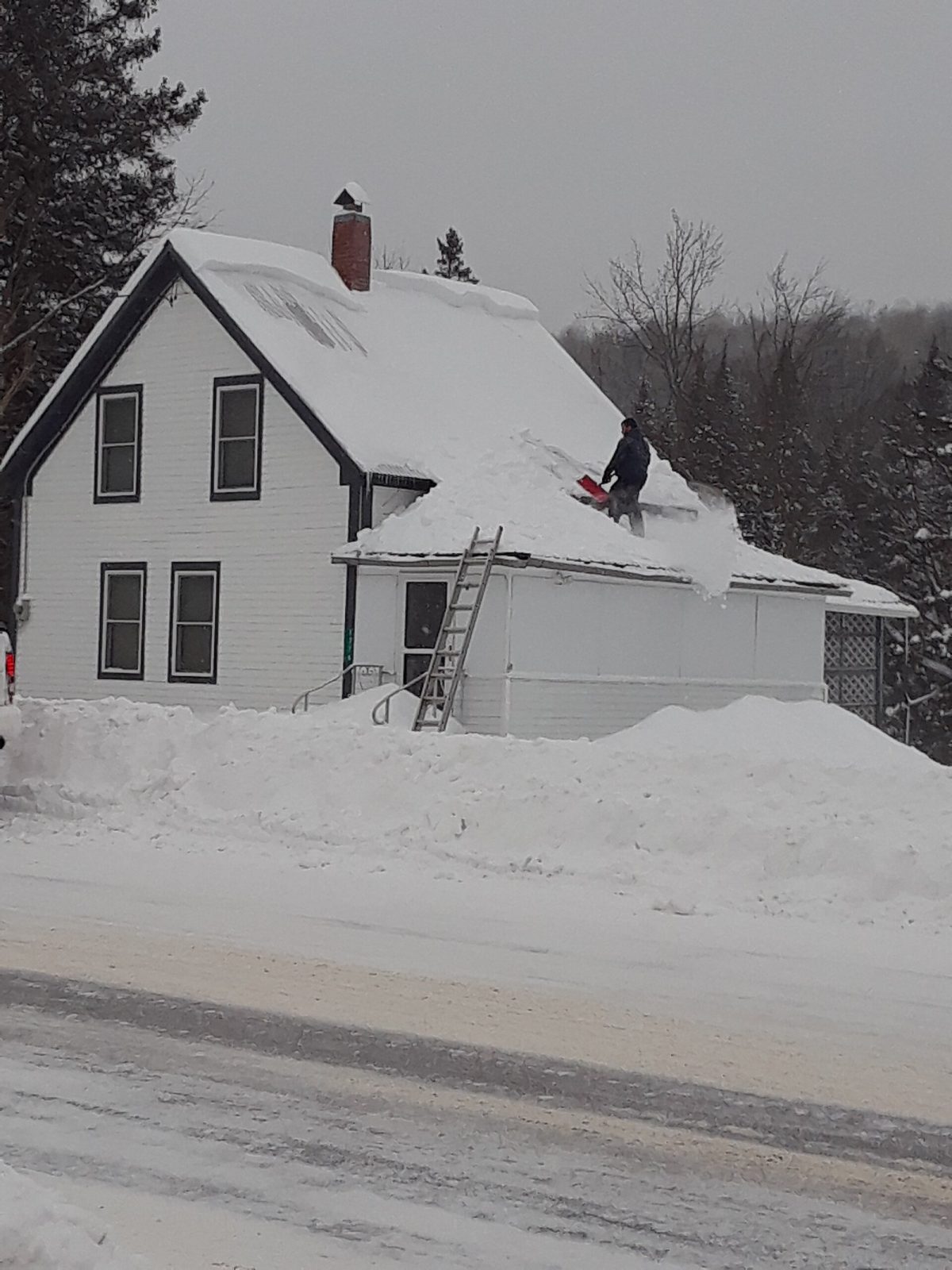
Direct answer: Snow looks soft and light, but a roof full of it can weigh tons. The Federal Emergency Management Agency's Snow Load Safety Guide puts it in plain numbers: one foot of light, dry, fresh snow weighs about 3 pounds per square foot, one foot of wet, heavy snow weighs about 21 pounds per square foot, and one foot of ice weighs about 57 pounds per square foot. A roof does not fail because of how deep the snow looks — it fails because of how much it weighs, and that depends on the snow's density, on rain falling on top of it, and on wind piling it into drifts. Roofs are designed for the snow load in the local building code, so a normal winter is usually fine — the danger comes when the load goes beyond what the roof was designed to carry, and that is when the warning signs below matter.
How snow gets heavy
Fresh snow is mostly air, but it does not stay fresh. As snow sits, it settles and gets denser, and a layer of rain on top soaks in and adds a great deal of weight: FEMA lists rain-on-snow as a key cause of roof overload, because heavy rainfall on top of snow can melt it and saturate it, significantly increasing the load on the roof structure. Wind makes it worse by piling snow unevenly — drifts collect behind parapets and chimneys, around rooftop equipment, in the valleys between roof sections, and where snow slides off a higher roof onto a lower one. The New York State Education Department warns that drifted snow creates concentrated loads well in excess of what uniform snow would impose, and that buildings built before the state building code began to account for drifting in 1979 were not designed for it at all. Flat and low-slope roofs are at the greatest risk, because they cannot shed snow the way a steep roof can, and older buildings that have been reinsulated may hold snow on the roof longer, which adds to the load over repeated storms.
Warning signs your roof is overloaded
An overstressed roof usually gives some warning before it fails. FEMA's list of warning signs includes sagging ceiling tiles or boards, ceiling boards falling out of the ceiling grid, sagging sprinkler lines or sprinkler heads, popping, cracking, or creaking noises from the roof, sagging roof members, doors or windows that can no longer be opened or closed, cracked or split wood members, cracks in walls or masonry, and severe roof leaks. Fairfax County adds sagging ceilings beneath flat roofs, leaking water dripping through the ceiling, and new cracks in ceiling drywall or plaster. If you see any of these signs, get everyone out of the building immediately and call or text 911. Do not go back in until a local building official or a qualified design professional, such as a structural engineer, has inspected the building.
What to do — and what not to do
Do not climb onto the roof to clear it yourself. FEMA is direct on this point: snow removal from a roof is a dangerous activity that should only be done by qualified individuals, following safety protocols including fall protection. If you are clearing snow from the ground, use a long-handled, non-metallic snow rake and leave at least a couple of inches of snow on the roof — scraping it bare can damage the roof covering and cause leaks. Never use a metal rake: metal rakes can damage roofing material and pose an electrocution risk. Do not use mechanical snow removal equipment or sharp tools such as picks, and use plastic rather than metal shovels. Remove drifted snow first at elevation changes, parapets, and around equipment, then work from the center of the roof outward, removing snow in the direction of the primary structural members so the load stays balanced. Never stockpile removed snow on the roof, keep gutters, drains, and downspouts clear of ice and debris so meltwater has somewhere to go, and watch out for dislodged icicles and buried skylights, which are a high risk to anyone on a roof. If at any point you are concerned the roof could collapse, stop all removal and evacuate the building. A local building authority or a qualified design professional can tell you what your roof was designed to carry and whether the snow on it needs to come off. For more on preparing your home for winter, see the site's cold safety guidance and check the weather alerts page before the next storm.
Frequently asked questions
How much does a foot of snow weigh on a roof?
About 3 pounds per square foot when the snow is light and dry, and about 21 pounds per square foot when it is wet and heavy, according to FEMA's Snow Load Safety Guide. A foot of ice weighs about 57 pounds per square foot.
How do I know if my roof is overloaded?
Watch for sagging ceilings or roof members, popping, cracking or creaking noises, doors or windows that suddenly stick, cracks in walls or ceilings, and severe leaks. If you see any of these, evacuate immediately, call 911, and have a building official or qualified design professional inspect the building before anyone goes back in.
Can I shovel the snow off my own roof?
FEMA says roof snow removal is a dangerous activity that should only be done by qualified individuals. If you clear snow from the ground, use a long-handled non-metallic snow rake, leave at least a couple of inches on the roof, and never stand on the roof or use metal rakes or mechanical equipment.
Does rain make roof snow heavier?
Yes. Heavy rain falling on top of snow saturates it and significantly increases the load on the roof, according to FEMA. Blocked drainage can also let meltwater pool or form ice dams, which add a concentrated load at the eaves.
Sources
- FEMA - Snow Load Safety Guide (FEMA P-957)
- New York State Education Department - Ice and Snow Loads Warning
- Fairfax County - Snow and Roof Damage
About the author
WND Editorial Team — The World Natural Disasters editorial team curates disaster information from official scientific and humanitarian sources, reviews safety guidance against public-agency recommendations, and maintains the historical database.
Written and reviewed under our editorial policy. Factual claims cite the sources listed above.
Found an error? See our corrections policy.