King Tides: When the Highest Tides Flood the Coast
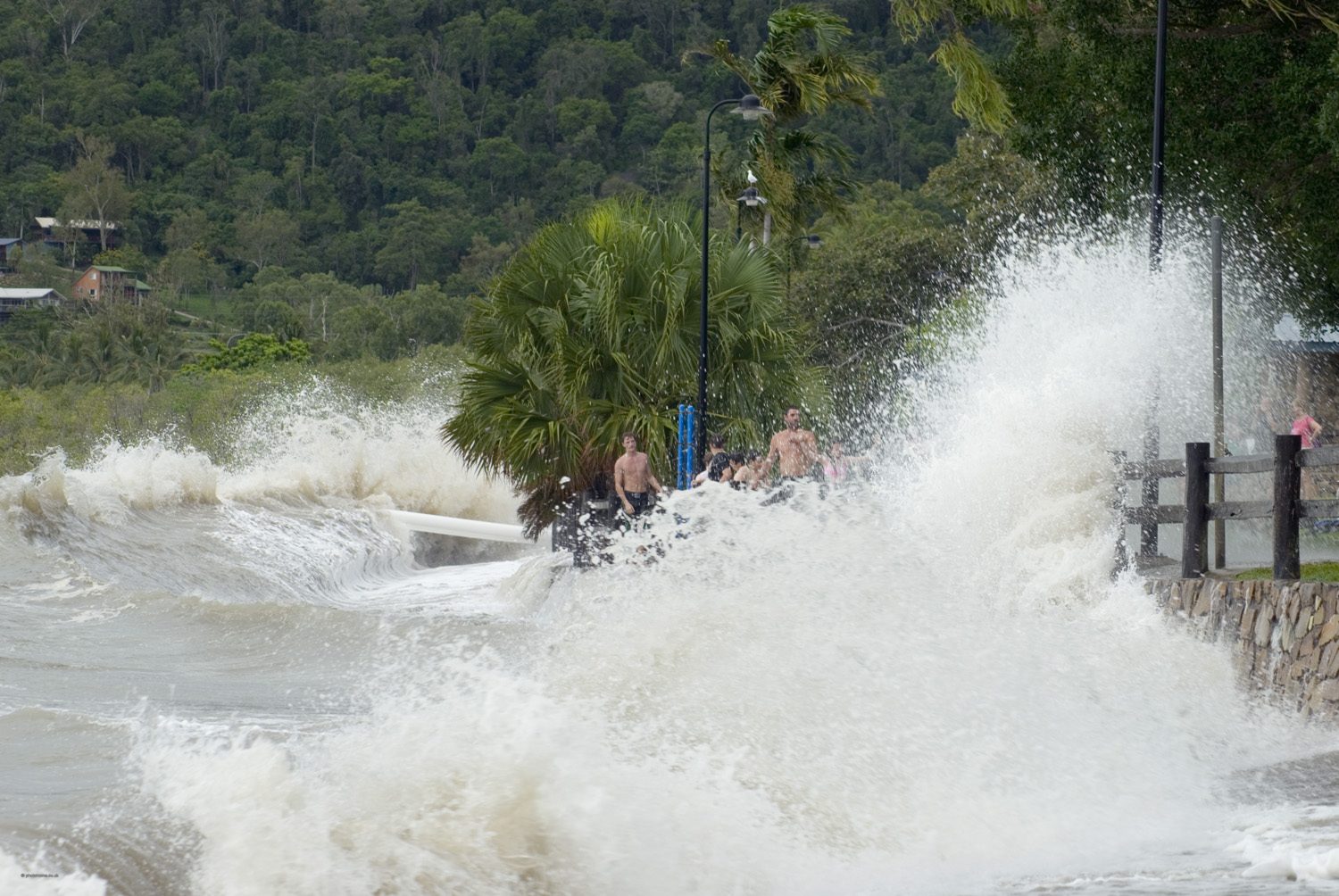
Direct answer: A king tide can flood a coastal street on a bright, dry day, with no storm anywhere near. The name is the popular term for an exceptionally high tide — the highest predicted high tide of the year at a coastal location. It happens when the moon is new or full and at its closest to Earth at the same time, and the extra water is enough to push the sea over roads and into neighbourhoods that never expect it. The flooding even has its own name: sunny-day flooding.
What makes a tide a king tide
Tides are long waves that roll around the planet as the moon and the sun pull the ocean back and forth. Most of the time the pull is ordinary. A king tide needs an alignment. First, a new or full moon, when the sun, moon and Earth line up and their pulls add together. Second, the moon at perigee, the nearest point of its elliptical orbit, when its pull is strongest. The City of Coral Gables, which tracks them closely, calls king tides perigean spring tides. Add an onshore wind or a low-pressure system and the water piles higher still.
Why streets flood on a sunny day
King tides flood the places the sea already reaches. In low-lying streets the water comes up through the ground and the drains, not over the beach: during a king tide the high water approaches the National Weather Service's Minor Flooding threshold, and seawater covers roads that are dry at any normal high tide. It is worse when the tide arrives with heavy rain, strong winds or big waves — but it does not need them. And the sea is doing it more often: Coral Gables notes that sea level rise is making king tides happen more frequently, last longer, and reach further inland than they used to.
How often it is happening now
The National Oceanic and Atmospheric Administration has been counting high tide flood days for over a decade, and the numbers keep climbing. For the year from May 2026 to April 2027, its stations are predicted to see a median of seven to twelve high tide flood days — a new record. Compared with the year 2000, the United States is seeing a median of seven more flood days a year, an increase of more than 250%. NOAA projects a national average of 55 to 85 flood days a year by 2050. This year the returning El Niño is adding to the count: the Pacific Coast and the Mid-Atlantic are expected to see more flooding through the cool season. The Mid-Atlantic is predicted to see 15 to 20 flood days, with Lewisetta and Sewells Point in Virginia each facing up to 27. The Northeast is predicted to see five to eleven, with Kings Point, New York, facing 16 to 22. The Southeast has seen an average of seven more flood days a year since 2000 — a rise of more than 550%.
The next ones to watch
Tides can be predicted months ahead, and the next round is already on the calendar. Along South Florida's coast, NOAA predicts high tides peaking from 22 to 29 November 2026, around the full moon, and again from 22 to 27 December. The dates change from place to place, so the check that matters is the tide prediction for your own coast. The same water reaches Britain, where the Environment Agency publishes flood alerts and warnings: on 19 November 2026 its live list included alerts for the tidal Rivers Bure, Ant and Thurne in Norfolk and for the tidal Thames in London — ordinary tides, doing ordinary damage, on an ordinary day.
What to do when the tide is high
Start with the forecast: check tide times and NOAA's high tide flooding outlook for your area, and use tools like the NOAA Sea Level Rise Viewer or your county flood map to see which streets go under. Before the water arrives, move vehicles to higher ground — and if you do drive through salt water, wash the car down with fresh water afterwards, because salt corrodes fast. Keep sandbags handy if you live in a flood zone, review your flood insurance, and make a plan for flood safety. When the water is in the street, do not drive through it: it is dangerous and it can wreck your car, so find another route. Do not walk through flood water if you can avoid it — it can be a health hazard — and wash your hands, clothes and pets if you do. Boaters should remember that high tides mean lower clearance under bridges, so check the tide before leaving the dock. Check our weather alerts page for warnings in your area, and our storm surge safety guide for what to do when the sea comes ashore.
Frequently asked questions
What is a king tide?
NOAA's Ocean Service calls it a popular, non-scientific term for exceptionally high tides. The City of Coral Gables defines it as the highest predicted high tide of the year at a coastal location, also called a perigean spring tide.
Can a king tide flood my street when it is not raining?
Yes — that is sunny-day flooding. King tides flood low-lying coastal areas on clear days, and the flooding gets worse if heavy rain, strong winds or big waves arrive at the same time.
When is the next king tide?
It depends where you live. Along South Florida's coast, NOAA predicts high tides peaking 22 to 29 November 2026, around the full moon, and again 22 to 27 December 2026. Check NOAA tide predictions for your own coast.
Is high tide flooding getting worse?
Yes. NOAA says the United States has a median of seven more high tide flood days a year than in 2000 — a rise of more than 250% — and projects a national average of 55 to 85 days a year by 2050, driven by sea level rise.
Sources
- NOAA Ocean Service - What is a King Tide?
- NOAA Tides & Currents - Annual High Tide Flooding Outlook
- City of Coral Gables - King Tides
- Environment Agency - Flood alerts and warnings
About the author
WND Editorial Team — The World Natural Disasters editorial team curates disaster information from official scientific and humanitarian sources, reviews safety guidance against public-agency recommendations, and maintains the historical database.
Written and reviewed under our editorial policy. Factual claims cite the sources listed above.
Found an error? See our corrections policy.