After a Wildfire, the Next Rain Can Bring Mudslides
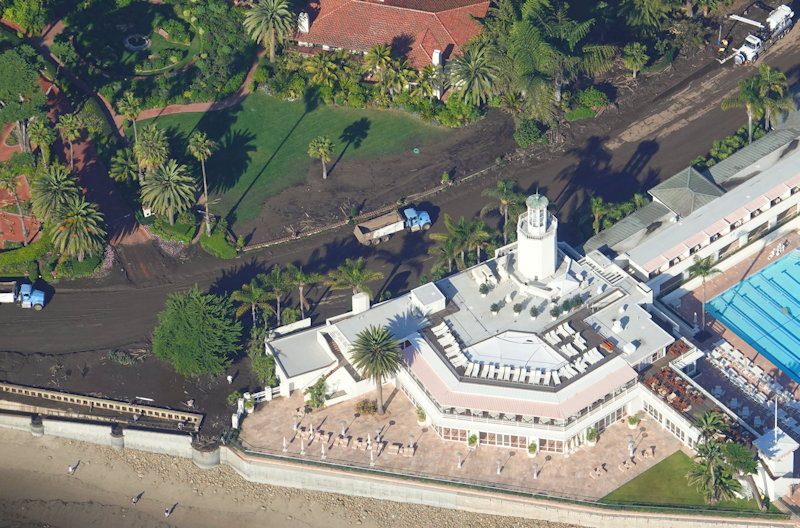
Direct answer: When a wildfire burns through a hillside, the danger does not end when the flames go out. The fire changes the soil itself: where it burned hot enough, the ground develops a layer that repels water, like rain on pavement. Rain that would once have soaked into the forest floor now runs off in minutes, and a short, hard burst can turn into a flash flood or a debris flow. It takes far less rain than most people expect.
Why burned ground behaves differently
A healthy forest floor is a sponge. The canopy breaks the rain, and loose leaves, needles and duff soak up what gets through. Fire takes all of that away, and the heat can bake a water-repellent layer into the soil underneath. The National Weather Service office in Boulder, Colorado, puts it plainly: rainfall that would normally be absorbed by the forest canopy and loose tree litter will instead quickly run off. With the plants that held the soil in place gone, the potential for debris flows rises.
How little rain it takes
A debris flow does not need a long storm or a soaked hillside. The National Weather Service says it can start on a dry slope after only a few minutes of intense rain — by intense it means a burst of about half an inch in an hour. With debris flows, the rainfall rate matters more than the total. The California Geological Survey says triggering rain can be as little as 0.2 inches in 15 minutes, though the threshold is different in every watershed. The U.S. Geological Survey makes the same point in its own words: just a small amount of rainfall on a burn scar can lead to flash floods and debris flows. The risk is highest in small, steep watersheds of less than three square miles.
What a debris flow actually is
People call them mudslides, but scientists draw a sharper line. A debris flow is a fast-moving, deadly landslide: a powerful mixture of mud, rocks, boulders and whole trees — and sometimes homes or vehicles — surging downhill. The California Geological Survey describes them as moving like fast-flowing concrete, strong enough to pick up boulders and trees and knock houses off their foundations. They are fast and unpredictable: the weather service warns they can travel faster than you can run, and they can catch up to your car. Nobody can say exactly where one will start or where it will go, and the geological survey notes they can leave their channels and cause damage miles from where they started.
The warning signs
Learn the signs before the rain starts, because there is rarely time to learn them during it. The National Weather Service lists them: rushing water or mud, and unusual sounds — trees cracking, or boulders knocking together. A faint rumbling that grows louder as the flow nears. A creek that suddenly rises, turns muddy, or drops even while it is still raining, which can mean debris is blocking it upstream. Fences, retaining walls, utility poles, boulders or trees starting to move. It does not have to be raining where you are: storm clouds upstream, a dry wash filling with water, water levels rising and falling — all of it counts.
Before the rain: get ready
The best protection is a plan made on a dry day. Work out your evacuation route now, and if you have time to use it, use it — your best option may be to climb uphill to safety. Keep more than one way of receiving warnings: a NOAA Weather Radio with the Tone Alert feature and the SAME code set to your county, plus battery backup, and sign up for emergency alerts with your county or local emergency management agency. Pack an emergency kit and keep important papers in a safe, waterproof place. If you live below a burn scar, look at flood insurance: a policy takes 30 days to go into effect, so it has to be bought before the storm. Check our weather alerts page before you travel.
When the rain starts
Stay alert and awake: the weather service notes that many landslide deaths happen while people are sleeping. Be ready to move the moment a warning is issued, or the moment you see flooding or a debris flow — because the gap between rainfall and flash flooding is so short, you may not get a warning at all. Never cross a road with water or mud flowing over it, and never cross a bridge if you can see a flow approaching. If you are caught in the path of a landslide, move uphill as quickly as possible. The geological survey's advice is short: don't delay. Save yourself, not your belongings.
How long the danger lasts
The risk does not fade with the first green shoots. The California Geological Survey says substantial recovery usually takes three to five years, and the danger is highest in the first year after the fire. But the ground keeps changing: landslide risk can rise again around five years after a fire, when the roots killed in the flames rot away. After a fire, California sends Watershed Emergency Response Teams to map the risk, and the U.S. Forest Service does the same on federal land. See how past fires unfolded on our history pages.
Frequently asked questions
How much rain does it take to cause a debris flow after a wildfire?
Very little. The California Geological Survey says triggering rain can be as little as 0.2 inches in 15 minutes, though the threshold is different in every watershed. The National Weather Service counts about half an inch in an hour as intense, and with debris flows the rainfall rate matters more than the total.
What is the difference between a mudslide and a debris flow?
People use the words interchangeably, but to scientists they are different kinds of landslide, and debris flows are the most powerful and dangerous. A debris flow is a fast-moving mix of water, mud, rocks, boulders and trees. The California Geological Survey says the media terms mudslide and mud flow cover a wide range of flows, from muddy water to full debris flows.
How do I know if my home is at risk?
The National Weather Service rule of thumb is simple: if you can look uphill from where you are and see a burnt-out area, you are at risk. The risk rises with burn severity, steepness, and how much of the watershed burned. The U.S. Geological Survey publishes hazard maps for many recent fires, and California's Watershed Emergency Response Teams assess the risk after wildfires.
How long after a fire does the danger last?
The danger is highest in the first year and usually eases substantially within three to five years as vegetation returns. But landslide risk can rise again around five years after a fire, when roots killed in the flames decay and slopes lose support.
Sources
- National Weather Service Boulder - Flood After Fire
- California Geological Survey - Geohazards Following Wildfire
- U.S. Geological Survey - A NOAA USGS Demonstration Flash-Flood Debris-Flow Early-Warning System (Fact Sheet 2005-3104)
About the author
WND Editorial Team — The World Natural Disasters editorial team curates disaster information from official scientific and humanitarian sources, reviews safety guidance against public-agency recommendations, and maintains the historical database.
Written and reviewed under our editorial policy. Factual claims cite the sources listed above.
Found an error? See our corrections policy.