Ice Jams: When a Frozen River Suddenly Floods
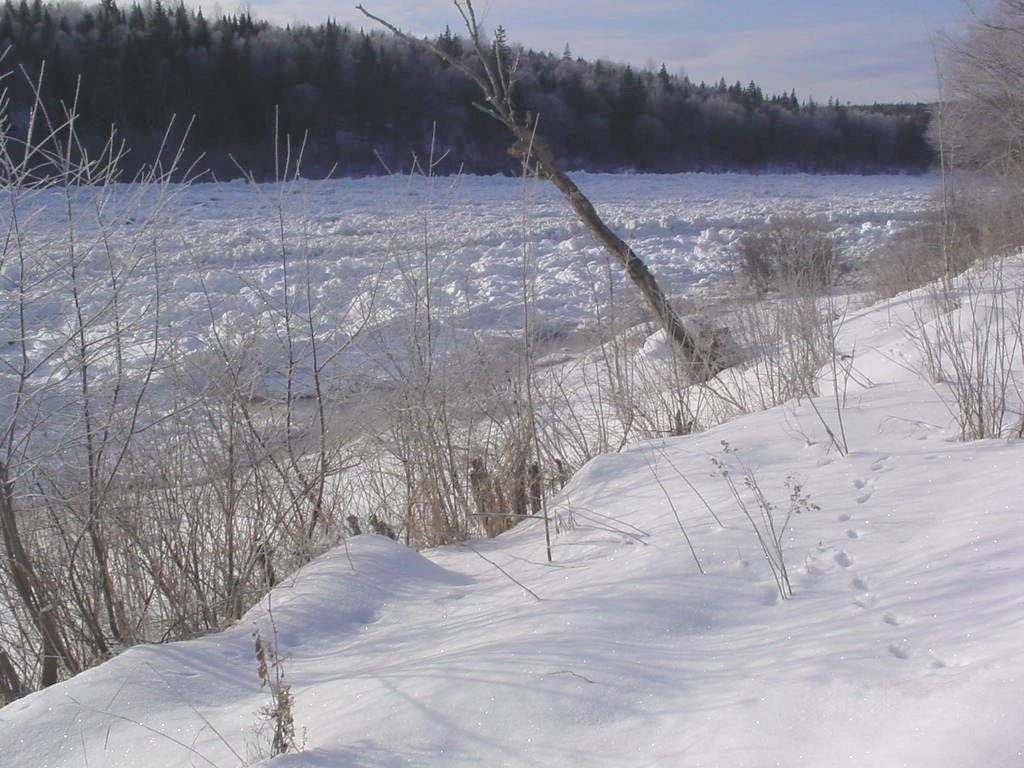
Direct answer: An ice jam is a pile-up of broken river ice that acts like a sudden, unplanned dam. When a river's ice cover breaks apart — usually during a mid-winter or early-spring thaw, especially if rain falls on top of melting snow — the chunks float downstream until something stops them: a bridge, a bend, a narrow stretch, or thicker ice. Water then backs up behind the jam and floods the land upstream, and when the jam finally breaks, the trapped water and ice can surge downstream like a small dam failure. Ice jams are hard to predict, they can flood an area in a very short time, and the water involved is powerful: the National Weather Service notes that even six-inch-thick ice can destroy large trees and knock houses off their foundations. If you live near a river, know your area's flood history, watch river levels during a thaw, and never drive into floodwater.
How an ice jam forms
Ice jams most commonly form when temperatures warm up after a long cold spell, especially when an influx of rain into the waterway also causes ice to break up and move around, according to the National Weather Service office in State College, Pennsylvania. The broken ice rides the current until it meets an obstruction. The most common jam points are constrictions in the waterway, such as terrain pinch-points, gaps and islands, bridges and piers, and other infrastructure along or in the river; the confluence of two waterways; places where the channel has more rocks; and spots where the river's slope changes rapidly from steep to flat. The National Weather Service office in Burlington, Vermont, adds that jams can also form during freeze-up itself, when ice forming in a river during a spell of extremely cold temperatures restricts the river's normal flow.
The timing matters. Ice-jam flooding generally occurs between mid-winter and early spring, when a prolonged warm spell accelerates snowmelt, enhances runoff, and raises river levels until the ice cover breaks up. That is why a thaw after weeks of deep cold deserves as much attention as the cold itself: the danger arrives with the warming, not the freezing. Snowmelt and river-ice breakup often happen at about the same time, and the combination of heavy rainfall on frozen ground plus substantial snowmelt can produce rapid runoff into streams and rivers, so a jam is sometimes only one part of a wider winter flood.
Two dangers, both fast
An ice jam threatens in two directions at once. First, the water held back behind the jam floods the area upstream of the blockage, sometimes with a rapid and dramatic rise in water level — the Burlington office cites the Winooski River at Montpelier in March 1992 and Dish Mill Brook in East Burke in March 2008 as examples of how quickly this can happen. Second, if the jam breaks up suddenly, the outpouring of pent-up water can wash away things below the old jam much like a dam break would, on a smaller scale. The Grand Forks, North Dakota, office warns that once a jam gives way, a location may experience a flash flood as all the trapped water and debris rush downstream, which is why it is important to know when a nearby river is affected by an ice jam and to avoid the area until the jam has been resolved.
Watch for the warning signs. The Burlington office advises that as the weather becomes more moderate, you should be alert for ice breakup and the increased likelihood of ice jams, and that any rapid rise or fall in a river's level may indicate that a jam has formed — a fluctuation in either direction is a signal, not reassurance. Ice jams can result in dangerous flooding in a short period of time, so a river that looks calm in the morning can be a different river by the afternoon.
What to do: warnings, higher ground, and never driving in
The National Weather Service issues flood watches and warnings to give advance notice. A Flood Watch means flooding is possible within the next 12 to 36 hours and preparations should be made; a Flood Warning means flooding is imminent or occurring and immediate safety actions are necessary; and flash flood warnings are issued for the most dangerous jams. Check river conditions daily during thaw season — the Grand Forks office points readers to water.weather.gov — and listen to NOAA Weather Radio for the latest statements.
If you live along any river or stream, know the history of flooding in your area and be prepared to seek higher ground if floodwaters approach. Heed local officials if they advise evacuation, and report flooding to the appropriate authorities so reports reach the National Weather Service. Above all, never drive a car into a flooded roadway: the Burlington office's warning is blunt — turn around, don't drown, because cars easily become stuck or washed away in floodwaters, and it is particularly dangerous at night, when road washouts may be difficult to see until it is too late. For current hazards in your area, check the site's weather alerts page and its history of past disasters.
Frequently asked questions
What exactly is an ice jam?
Chunks of river ice that pile up together and act like a mini dam, holding back water that should flow freely. The jam usually forms where the river narrows, bends, meets another waterway, or passes a bridge or other obstruction.
When do ice jams usually form?
Most often between mid-winter and early spring, when a prolonged warm spell accelerates snowmelt and raises river levels so the ice cover breaks up — especially if rain falls on top of the melt. They can also form during freeze-up in extreme cold.
How fast can ice-jam flooding happen?
Very fast. Water can rise rapidly behind a jam, and when a jam breaks, the trapped water and debris can surge downstream as a flash flood. A rapid rise or fall in river level during a thaw is a warning sign a jam may have formed.
What should I do if I live near a river in thaw season?
Know your area's flood history, watch river levels and National Weather Service flood watches and warnings, be ready to move to higher ground, avoid the river area until any jam is resolved — and never drive into a flooded roadway.
Sources
- National Weather Service State College - Ice Jams and their Dangers
- National Weather Service Grand Forks - Flood Safety Awareness Week, Day 3: Ice Jams and Snowmelt
- National Weather Service Burlington - Winter Weather Preparedness Week: Flooding and Ice Jams
About the author
WND Editorial Team — The World Natural Disasters editorial team curates disaster information from official scientific and humanitarian sources, reviews safety guidance against public-agency recommendations, and maintains the historical database.
Written and reviewed under our editorial policy. Factual claims cite the sources listed above.
Found an error? See our corrections policy.