Landslides and Debris Flows: Warning Signs That Save Lives
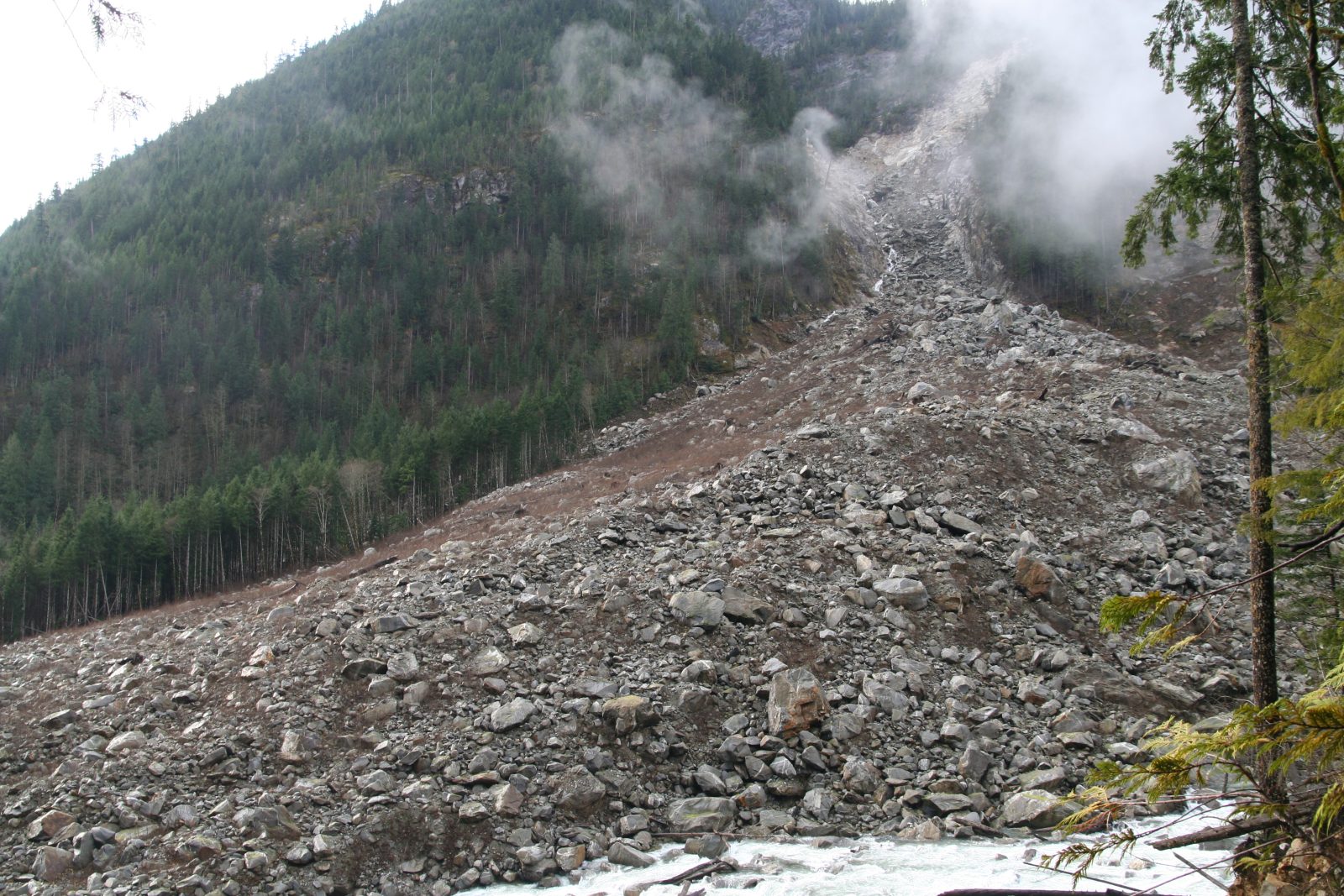
Direct answer: A landslide is the movement of a mass of rock, debris or earth down a slope, in the US Geological Survey's definition. Its fastest, deadliest form is the debris flow: a torrent of mud, boulders, trees and cars that can exceed 35 mph, strike with little warning, and travel for miles down steep stream channels. Landslides kill 25 to 50 people a year in the United States. Learn the warning signs below — they are the difference between getting out in time and being caught.
Landslides and debris flows — what the terms mean
Landslides are a type of "mass wasting": any down-slope movement of soil and rock under gravity's direct pull. The USGS recognizes five modes of slope movement — falls, topples, slides, spreads and flows. A debris flow is a fast-moving landslide, "particularly dangerous to life and property because they move quickly, destroy objects in their paths, and often strike without warning." They occur in all 50 states and US territories, usually during intense rainfall or rapid snowmelt, starting on hillsides or mountains. The USGS notes that "mudslide," "mudflow," "lahar" and "debris avalanche" are all names for the same family of fast-moving landslides.
Landslides can be set off by rainfall, snowmelt, changing water levels or groundwater, stream erosion, earthquakes, volcanic activity, or human disturbance of slopes. Areas recently burned by wildfire are especially susceptible — including areas downslope and outside the burned area — and Ready.gov warns that the risk stays elevated for several years after a fire.
The warning signs of a moving landslide
The USGS lists three signs that a landslide may already be moving:
- Unusual sounds — cracking or breaking wood, knocking boulders, groaning of the ground — especially if the sound keeps increasing.
- A loud rumble with ground vibrations, "like the sensation of a passing freight train."
- If you are near a stream, a sudden change in water level — especially during or right after intense or prolonged rain.
Note that some landslides happen suddenly, with no warning signs at all.
The warning signs that one may be developing
These slower-developing signs, also from the USGS, mean a slope may be failing. Report them to your local authorities so the area can be properly evaluated:
- New cracks, bulges or other deformation in the ground, roadways or other surfaces.
- Water flowing or ponding on a slope where it never has before.
- Leaning utility poles, deformed fences or tilting trees on a hillside; sagging or taut utility lines.
- Doors or windows that stick or jam for the first time; new cracks in walls, ceilings or foundations.
- Broken or leaking water, septic or sewer lines.
- Structures separating from their foundations, or soil pulling away from a foundation.
- Abnormal changes in well water levels.
Before: prepare
Build an emergency kit and a household plan, sign up for your community's warning system, and know that the Emergency Alert System and NOAA Weather Radio also carry landslide alerts. Leave immediately if told to evacuate. In slide-prone areas, consult a geotechnical professional about protective measures — flexible pipe fittings, or channels and deflection walls to direct debris flow around buildings. Ready.gov's honest caveat: "you can't stop or change the path of a debris flow," and diverted flow that damages a neighbor's property can make you liable. Ask your insurance agent too: debris-flow damage may be covered by National Flood Insurance Program policies.
During: what to do
Stay alert and awake during storms that could trigger a slide — Ready.gov notes many landslide deaths happen while people are sleeping. "By the time you are sure a debris flow is coming, it will be too late to get away safely." Never cross a road with water or mud flowing over it, and never cross a bridge if you see a flow approaching — it can grow too fast to escape. Caught in the path of a landslide, move uphill as quickly as possible, and avoid river valleys and low-lying areas.
If you are inside a building that a landslide is hitting, the USGS advice is counterintuitive but clear: do not try to evacuate. Go to the highest floor or climb onto a countertop and wait for it to pass — running out into an active slide can carry you away. Landslides can also come in pulses, so the first may not be the last. Report the slide to your local authorities immediately.
After: stay clear
Keep away from the slide area — more slides can follow. Watch for flooding, which often follows landslides because the same storm causes both. Check for injured and trapped people without entering the slide area, and direct rescuers to them. Report broken utility lines and damaged roads. Let trained professionals check foundations, chimneys and surrounding land, and replant damaged ground quickly: lost ground cover leads to erosion, flash flooding and further slides.
Advisory, watch, warning
The USGS defines three levels. An advisory is a general statement about landslide potential tied to developing rainfall forecasts. A watch means landslide activity is possible but not imminent — know your preparedness and stay informed. A warning means landslides are occurring now and extreme caution is needed. Rainfall-driven debris-flow watches and warnings closely track National Weather Service flash-flood watches and warnings.
Related pages on this site: US weather alerts by state and the historical disaster archive.
Frequently asked questions
Is a mudslide different from a debris flow?
No. The USGS uses mudslide, mudflow, lahar and debris avalanche as other names for debris flows: fast-moving landslides that can exceed 35 mph and carry boulders, trees and cars.
What should I do if I am inside a building when a landslide hits?
Do not try to evacuate. The USGS advises going to the highest floor or climbing onto a countertop until the slide passes — running out into an active landslide can carry you away. Slides can come in pulses, so wait until you are sure it is over.
What is the difference between a landslide advisory, watch and warning?
An advisory is a general statement about landslide potential tied to developing rainfall forecasts. A watch means activity is possible but not imminent — stay informed and know your preparedness. A warning means landslides are occurring now: take extreme caution.
Do landslides only happen in mountainous areas?
No. The USGS says landslides occur in all 50 states and US territories, and debris flows can travel for miles down steep stream channels into areas unaware of the hazard. Any slope destabilized by rain, snowmelt, earthquakes, fire or construction can fail.
Sources
- USGS - What is a landslide and what causes one?
- USGS - What is a debris flow?
- USGS - Signs of landslide development and what to do
- USGS - How many deaths result from landslides each year?
- USGS - Landslide advisory vs watch vs warning
- Ready.gov - Landslides and Debris Flow
About the author
WND Editorial Team — The World Natural Disasters editorial team curates disaster information from official scientific and humanitarian sources, reviews safety guidance against public-agency recommendations, and maintains the historical database.
Written and reviewed under our editorial policy. Factual claims cite the sources listed above.
Found an error? See our corrections policy.