Dust Storm Safety: What to Do When Visibility Drops to Zero
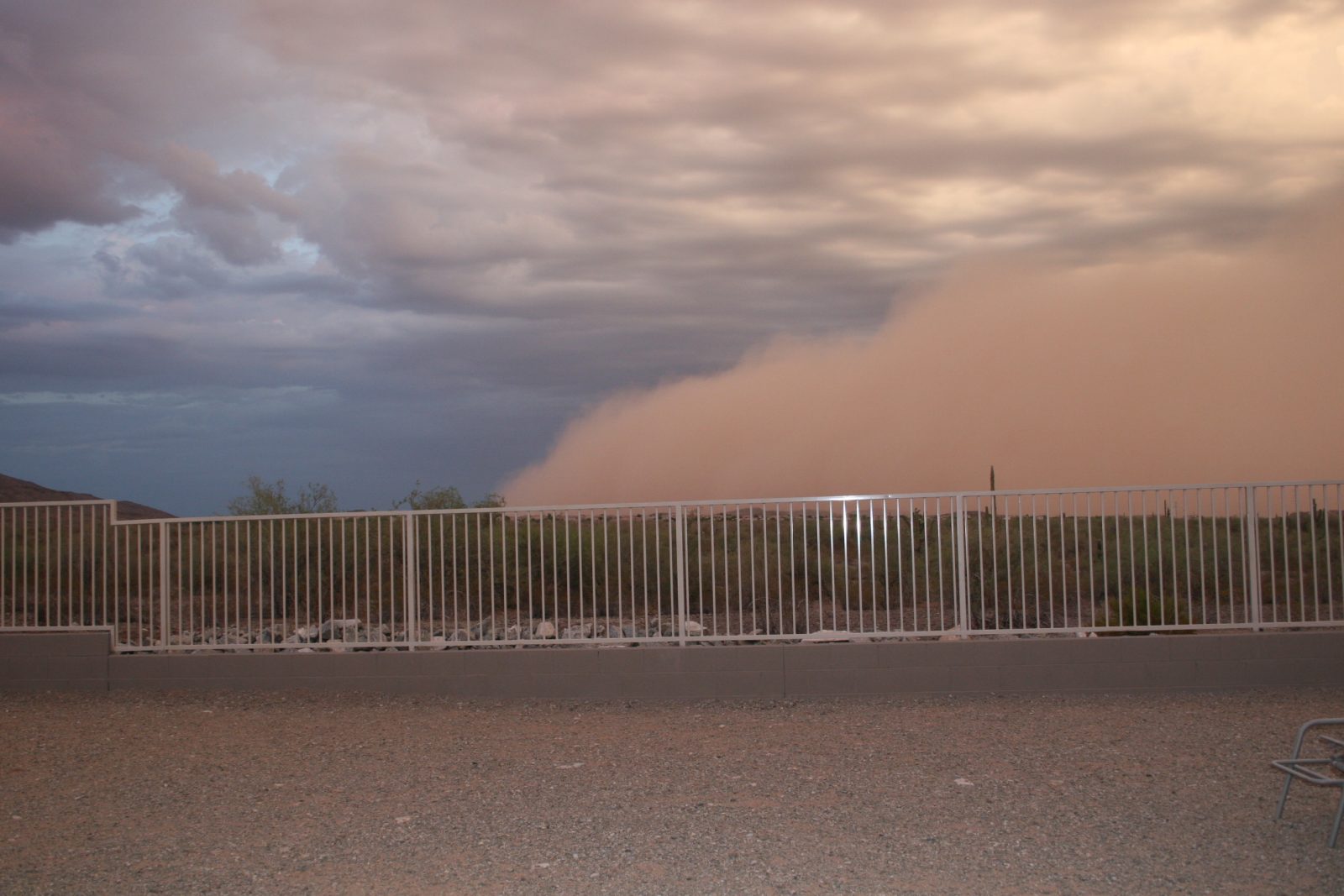
Direct answer: A dust storm can arrive suddenly as a wall of dust and debris miles long and several thousand feet high, and blinding, choking dust can reduce visibility to near zero within moments — the National Weather Service warns that even though these storms usually last only a few minutes, the actions a motorist takes during the storm may be the most important of their life. The rule is simple: do not drive into a dust storm. If one catches you, pull completely off the pavement, stop, turn off all lights, set the emergency brake, take your foot off the brake pedal, and wait it out.
What dust storms are and where they strike
Dust storms can occur anywhere in the United States, but they are most common in the Southwest. Many of the biggest ones are haboobs — dust storms created by strong thunderstorm outflow winds. They arrive with little warning, and the wall of dust can cause chain collisions and massive pileups on highways. A peer-reviewed study of the 5 July 2011 Phoenix haboob measured peak wind gusts of about 65 mph and record particle levels, showing how violent a single outflow event can be. In Arizona, dust storms are a feature of the monsoon season, which officially runs June 15 to September 30.
Driving: the "Pull Aside, Stay Alive" steps
If you see dense dust blowing across or approaching the road, follow the NWS and Arizona Department of Transportation steps:
- Check traffic immediately around your vehicle and begin slowing down.
- Completely exit the highway if you can. Pull the vehicle as far off the paved portion of the roadway as possible — never stop in a travel lane, and not even on the shoulder or emergency lane.
- Stop in a position a safe distance from the main roadway, away from where other vehicles may travel.
- Turn off all vehicle lights, including your hazard flashers. This is critical: drivers behind you can mistake your lit car for one still moving and follow your lights — leaving the roadway or colliding with your parked vehicle.
- Set the emergency brake and take your foot off the brake pedal, so your brake lights are not illuminated either.
- Stay in the vehicle with your seatbelt buckled and wait for the storm to pass.
Drivers of high-profile vehicles should be especially careful — dust-storm crosswinds are a real hazard — and remember that your own alertness and safe driving ability remain the number-one factor in preventing crashes.
Before you drive: check and plan
Dust storms arrive suddenly, but the conditions that produce them are forecastable. Before driving through the Southwest in monsoon or storm season, check the forecast for dust advisories and warnings, and remember that the outflow from a thunderstorm you cannot even see can send a dust wall toward you at highway speed. Keep extra water in the car — dehydration and dust inhalation are a bad combination if you are stranded — and make sure someone knows your route.
Pedestrians and outdoor workers
The NWS guidance focuses on drivers because pileups are the deadliest outcome, but a haboob's winds can top 65 mph and hurl debris. If you are caught outside on foot, move away from the roadway, get inside the nearest sturdy structure if you can, and protect your eyes and airway — cover your mouth and nose with a cloth and keep your head down until the storm passes. Do not try to outrun a dust wall; it is faster than you.
If you cannot pull off the road
If there is no way to leave the roadway safely, proceed only at a speed suited to the visibility, turn on your lights and sound your horn occasionally, and use the painted center line to help guide you while you look for a safe place to pull off. Never stop on the traveled portion of the roadway — a stopped car in the lane is exactly what causes chain collisions.
What a Dust Storm Warning means
A Dust Storm Warning means take action: the NWS issues it when visibility of a half mile or less due to blowing dust or sand combines with wind speeds of 30 miles an hour or more. NWS forecast offices issue the warning while the dust is actually happening in the area — so when you hear one, the danger is not approaching, it is there.
Why turning the lights off matters
It feels wrong to go dark, but the logic is proven by past pileups: in earlier dust storms, motorists pulled off the road and left their lights on, and drivers approaching from behind used those lights as a guide — driving off the road and, in some instances, straight into the parked vehicle. With your lights off, your brake pedal released and your parking brake set, your vehicle simply disappears into the dust instead of becoming a target.
Dust storms are over in minutes, but their consequences last for years. Learn them before you need them — and read more on past destructive storms in our history section.
Frequently asked questions
What is a haboob?
A haboob is a dust storm created by strong thunderstorm outflow winds. The National Weather Service describes it arriving suddenly as an advancing wall of dust and debris that may be miles long and several thousand feet high.
Where and when do dust storms happen in the United States?
They can occur anywhere in the country but are most common in the Southwest, where they are tied to thunderstorm outflow winds. In Arizona, dust storms are a feature of the monsoon season, which officially runs June 15 to September 30.
What should I do if I am driving when a dust storm hits?
Pull completely off the paved roadway — never stop in a travel lane — turn off all vehicle lights including your hazard flashers, set the emergency brake, take your foot off the brake pedal, stay in the vehicle with your seatbelt buckled, and wait for the storm to pass.
Why should I turn off my lights after pulling over?
Drivers behind you can mistake your lights for a vehicle still moving and follow them, leaving the roadway or colliding with your parked car. That is exactly how some past dust-storm pileups happened.
Sources
- National Weather Service - Dust Storms and Haboobs
- National Weather Service - Wind Warnings, Watches and Advisories
- Arizona Department of Transportation - Pull Aside, Stay Alive
- Arizona Department of Transportation - Never drive into dust storms (Monsoon Awareness Week, June 2026)
- Raman, Arellano and Brost (2014) - Revisiting haboobs in the southwestern United States
About the author
WND Editorial Team — The World Natural Disasters editorial team curates disaster information from official scientific and humanitarian sources, reviews safety guidance against public-agency recommendations, and maintains the historical database.
Written and reviewed under our editorial policy. Factual claims cite the sources listed above.
Found an error? See our corrections policy.