Hurricane / Cyclone / Typhoon United States
Hurricane Hazel, 15 October 1954
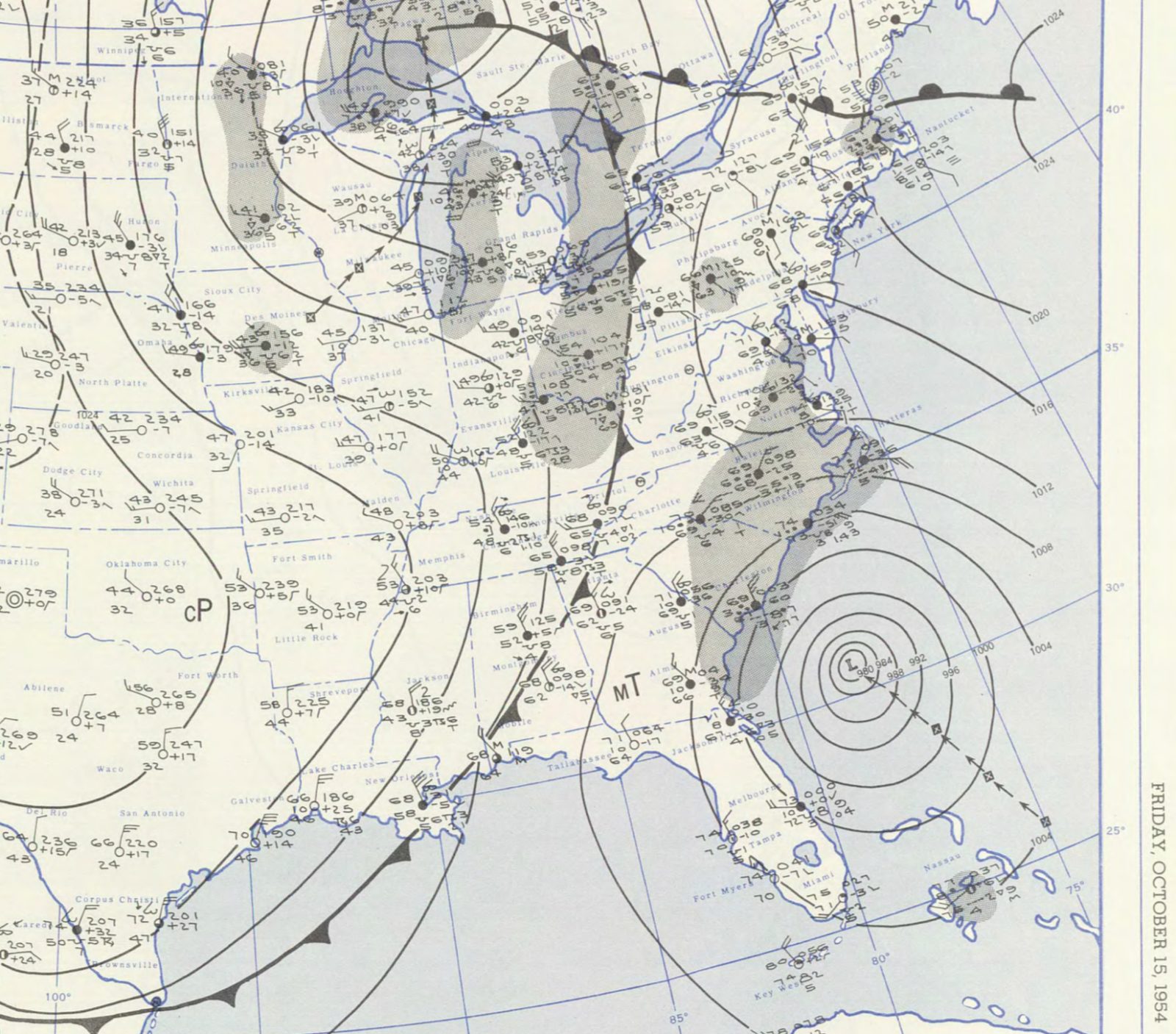
Two days after this entry publishes, it will be 72 years since Hurricane Hazel struck. On the morning of 15 October 1954, Hazel came ashore as a Category 4 hurricane near the North Carolina-South Carolina border — the strongest hurricane on record to strike North Carolina. Estimated winds of 130–150 mph battered the coast between Myrtle Beach and Cape Fear, and an 18-foot storm surge inundated the shoreline at Calabash, amplified by the year’s highest lunar tide (NWS Wilmington; NC State Climate Office). Hazel had formed on 5 October east of the Windward Islands, then turned north across western Haiti on 12 October, where flash floods and landslides killed an estimated 400 to 1,000 people. Racing inland at 55 mph, Hazel kept its strength far from the coast — gusts reached 90 mph in Raleigh — and crossed the eastern United States within about twelve hours (NWS Wilmington). Over Pennsylvania the storm merged with a cold front and became an extratropical storm, its centre passing directly over Toronto near midnight. Up to 285 mm of rain fell on already saturated ground in 48 hours; the Humber River rose 6 to 9 metres, washing out bridges and homes across the Greater Toronto Area (Environment Canada; TRCA). The death toll is estimated at about 1,200: 400–1,000 in Haiti, 95 in the United States, and 81 in Canada (NWS Wilmington; Environment Canada). The storm caused an estimated $381 million in damage in 1954 dollars — the deadliest and costliest storm of the 1954 hurricane season — and the name Hazel was afterwards retired from the hurricane naming lists (NWS Wilmington; NHC).
Sources & references
- NWS Wilmington - Hurricane Hazel, October 15, 1954
- Environment Canada - Hurricane Hazel, Storm Information
- Environment Canada - Hurricane Hazel
- TRCA - Hurricane Hazel's Legacy
- NC State Climate Office - Was Hazel North Carolina's Worst-Case Hurricane?
- NHC - Tropical Cyclone Naming History and Retired Names
Impact figures
| Fatalities | 1,200 |
|---|---|
| Economic damage | $381,000,000 (nominal) |
Figures per cited sources; estimates for older events vary.