Hurricane / Cyclone / Typhoon United States
The Great Lakes Storm of 1913 — the "White Hurricane"
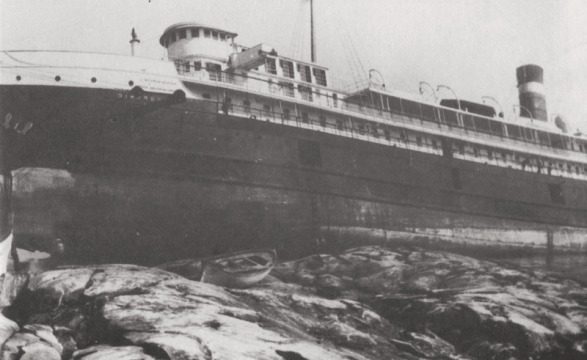
From 7 to 11 November 1913, the deadliest natural disaster ever to strike the Great Lakes unfolded over four days of whiteout blizzard conditions and hurricane-force winds. Nicknamed the "White Hurricane", the "Freshwater Fury" and the Great Storm of 1913, it killed about 250 people and wrecked a dozen major ships — the worst marine disaster in Great Lakes history.
Two storm systems did it. First, a "clipper" low dragging an Arctic cold front crossed the upper lakes on 6–7 November. Then a second, stronger southern storm phased with it over the lakes on 9 November — and that is when the White Hurricane phase began. Mariners endured 90 mph winds; NOAA's reconstruction concludes that four of the five Great Lakes likely experienced hurricane-force gusts for a minimum of 10 hours, potentially as long as 20 hours. Testimony from ship masters put the waves at least 35 feet high, coming in rapid succession. As the southern storm phased with the clipper, its central pressure fell from 985 hPa (29.10 inches) on the morning of 9 November to about 969 hPa (28.60 inches) that evening. At Port Huron, Michigan, downwind of Lake Huron, winds held at 50–60 mph from the afternoon of the 9th until almost midnight; downwind of Lake Erie they reached 50–70 mph, with gusts near 80 mph.
The toll on shipping was staggering. Eight ships on Lake Huron and one in Lake Erie sank in the six-hour window between 6 pm and midnight on 9 November — including the Isaac M. Scott, Charles S. Price, James C. Carruthers, Argus, Hydrus, John A. McGean, Regina, Wexford and Henry B. Smith. The U.S. Weather Bureau had issued warnings, but they travelled by the Coastal Warning Display flag-and-pennant program, and most of the ships that sank had no wireless equipment — once at sea, mariners had no way to receive updated forecasts. The passenger steamer Huronic was among the vessels driven ashore by the storm. Damages topped $5 million in 1913 dollars — more than $117 million in 2014 dollars, as stated in NOAA's 2014 reconstruction.
The exact death toll is uncertain. NOAA's Mariners Weather Log gives "an estimated 250 lives lost"; the National Weather Service's Detroit retrospective says "over 250 lives lost at sea"; NOAA's Great Lakes Region page says the White Hurricane claimed "more than 250 lives", with 8 ships and 200 sailors lost on Lake Huron alone. The sources agree on the scale — about 250 people — but 1913 record-keeping was incomplete, and some vessels were never found at the time, so no single exact figure exists.
The storm weakened on 10 November and shifted to the St. Lawrence Valley on the 11th. Complaints about inaccurate forecasting and slow communication led to real improvements in weather forecasting and ship–weather communication afterward. Today, mariners get the warnings the 1913 crews never had — a reminder of why marine forecasts and weather alerts exist. Check US weather alerts by state and the Tropical Cyclone Outlook before any trip on the water.
Sources & references
Impact figures
| Fatalities | 250 |
|---|---|
| Economic damage | $5,000,000 (nominal) |
Figures per cited sources; estimates for older events vary.